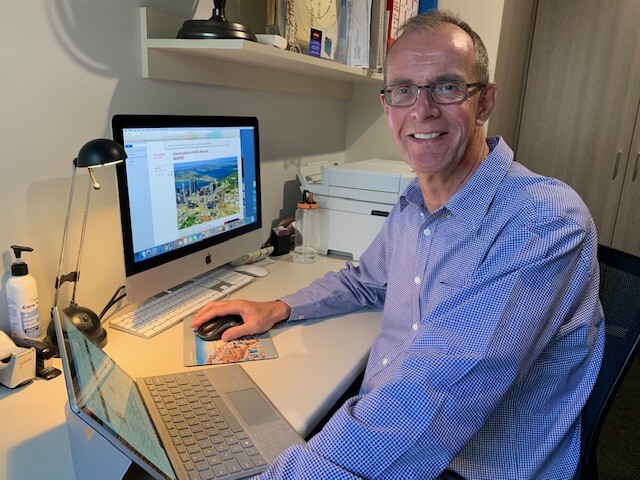

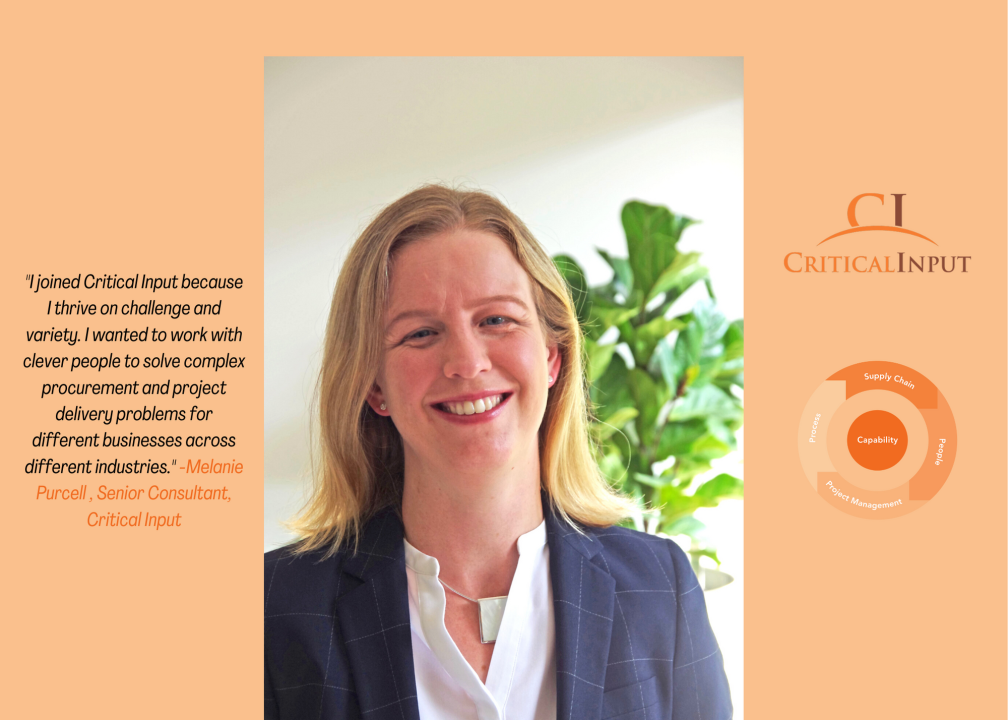
Meet Critical Input Senior Consultant Melanie Purcell

Critical Input Senior Consultant Melanie Purcell has clocked up nearly 20 years’ experience in all stages of contract development, including strategy development, tender preparation, drafting, negotiation, evaluation, contract award, contract administration, dispute resolution and close-out. She has worked with a variety of contract models across the water, mining, oil and gas, construction, petroleum, transport, defence, rail and manufacturing industries assisting both government and private clients. Armed with a law degree, Melanie is well respected for her integrity, work ethic, attention to detail and perseverance at successfully achieving challenging deadlines and complex project outcomes. She has a proven history of managing diverse teams, risk, expectations and change through collaborative leadership, a strong team culture, and a focus on probity and compliance with organisational governance.

Why Critical Input?
What are you working on right now?

My current focus is supporting TransGrid on the Supply Chain Business Improvement Program. The Supply Chain Management function is a relatively new addition to the business, so it needed a short, sharp intervention to fast-track process improvement and realise benefits for its internal and external customers.

What led you into this type of work?

I fell into Contracts and Procurement after finishing law and realising that I didn’t want to be a partner at a law firm. Soon after graduating, I was offered a role with United Group Rail that allowed me to use my legal background in a practical way to review and streamline supply contracts. I’ve since had a few site-based roles and focussed on construction contracts across a range of industries.

What do you bring to Critical Input that is unique and beneficial to clients?

My unique combination of formal legal training and practical site experience enables me to take a pragmatic and holistic approach to contracts, procurement and problem-solving.

Describe a typical day at Critical Input…

There’s no such thing as a typical day and it’s not unusual for original plans to be hijacked by higher priorities or client requirements. Usually, the day involves meetings with the client or CI team members and devising a solution of some kind – be it a procedure, a process flow, or a new form or template that streamlines how procurement functions.

Is there a particular type of work that you enjoy the most?

I like challenging work where I get to bounce ideas of smart people to achieve a solution to a complex problem. I’m a detailed person, but also enjoy being strategic and looking at the big picture, so anything where I can do both is my sweet spot.

What are some of the most common mistakes you see clients make when it comes to people and processes?

Not taking the time to understand the real problem. There is often a temptation to achieve ‘quick wins’ and look like progress is being made, but sometimes this is done at the expense of taking the time to make sure everything fits together as part of a packaged solution.

How do you know when you’ve done a good job or when a project has been a success?

From a client perspective, success is when the client is happy and they get what they want and more importantly what they need (as sometimes the two are different). From a personal perspective, a successful project is one where I can look back many years later and consider my work colleagues as friends and my clients and managers as people with whom there is a high degree of mutual respect.

Strengths

  • Contract strategies and formation
  • Contract management
  • Negotiation
  • Attention to detail and analytical skills
  • Contract claims and disputes
  • Continuous improvement.

Highlights

  • Preparing the Major Projects Procurement Framework for a large utility company
  • Overseeing the Early Tenderer Involvement (ETI) process for a large dam upgrade project
  • Managing the fast-tracked evaluation and award of a large Tank Refurbishment package for a petrochemical company which contributed to the successful achievement of an extremely time-critical schedule (independently assessed by IPA as only a 5% chance of success).
  • Working with a team of lawyers to assist a mining client in successfully defending the majority of a large payment claim from a contractor under the Building and Construction Industry Payments Act 2004 (Qld)
  • Working on-site for the Clermont Coal Mine Project with a great team of people.

Qualifications

  • Bachelor Business/Bachelor Laws, Graduate Diploma of Legal Practice

Memberships/licences

  • Society of Construction Lawyers Australia

Is risk adversity a risk to business?

While important, risk mitigation shouldn’t replace purpose. To live in a world completely devoid of risk poses its own risks – including the risk of loss of opportunity or even, the loss of profit.

By Critical Input Senior Consultant Henk De Vos

Risk mitigation covers health and safety, environmental, financial and statutory compliance, cyber security as well as reputational risk. Over the years, organisations have appointed functional leads to manage these perceived risks, who in turn have created departments to develop and implement policies and procedures to institutionalise these perceived risks. While risk is very real and needs to be considered, it shouldn’t dominate an organisation’s goals. Risk mitigation shouldn’t cause risk.

Adaptation the new superpower

The world is continually changing, and companies need to be agile enough to adapt to this changing world. Unfortunately, many companies have become institutionalised because of policies, procedures and people management. Any breach of policy or procedure could lead to dismissal and hence staff are driven down the compliance line of thinking. While companies talk about innovation and continuous improvement projects, most of these projects fail because they challenge the companies institutionalised culture. How do you challenge the company’s culture when the company believes it’s operating and performing at “best practice” levels?  

Perfection becoming the enemy of good

And what is this allusive “best practice”? Many failed companies once dominated their markets by delivering “best practices” that were the envy of their peers, including:   

  • Blackberry Motion
  • Blockbuster Video      
  • IBM
  • Kodak
  • Nokia
  • Toy R Us.

Big corporations can learn from small businesses

All these companies were once the best in their field, but they failed to adapt to the changing world. New start-up companies seldom rely on policies, procedures and people management, but instead manage risk on a case-by-case basis. They’re continually challenging established standards in search of a market edge. Change management isn’t even on their radar, as they’re in a perpetual state of transformation. Start-ups rarely have established supplier or service provider relationships, rather they’re always scanning the environment for the right partners to help them address their needs at affordable price-points. Of course, these are generalisations and we do recognise that there are start-ups that are more policy and process-driven.

When was the last time that you contracted a truly independent external service provider to review your company’s operations?

A service provider:

  • With the operational expertise to review your current processes and provide an honest overview of your company’s Strengths, Weaknesses, and Opportunities,
  • Who can partner with your company to maintain the business as usual while implementing the identified innovation and Continuous Improvement projects
  • That’s 100% Australian owned company
  • Whose 25-strong team comprises of seasoned ex-industry professionals
  • That delivers results, not PowerPoint presentations
  • Whose only objective is to transform your company, into the company that you want it to be!
  • If you really wish to challenge your “as is” to understand why you’re not maximising your companies profit, contact Critical Input for fresh eyes and independent advice.
  • Critical Input is a consultancy firm with its feet firmly on the ground. Skilled at bridging the gaps for clients, we provide functional solutions and implement long-standing processes.
  • Critical Input gets in and does the work alongside its clients, stepping into the weeds when needed, while also providing high-level strategic support.    

CRITICAL INPUT VALUES

Process:

Because without process, there is no destination. We’re process-driven, but also process-drivers. Anchored in the measurement-based strategy for continuous improvement, “Six Sigma”, Critical Input focuses on assessing, tweaking, and refining processes so that your organisation runs like a well-oiled machine.

People:

Because without buy-in, there is no evolution. A formal client stakeholder map is always the starting point. We identify the movers, the shakers, the influencers and the change-makers, and spend time engaging and aligning with these enablers in the organisation. It’s a given that Critical Input hand-picks the best professionals for the job. All our consultants are highly educated and experienced with tried and proven strategies.

Principles:

Because integrity is everything. Critical Input’s agile team is led by a strong moral compass and committed to providing a service based on honesty, trust and transparency. We always deliver the highest quality of service to our clients and provide support, even after project completion. We operate on this principle we’re happy when you’re happy.

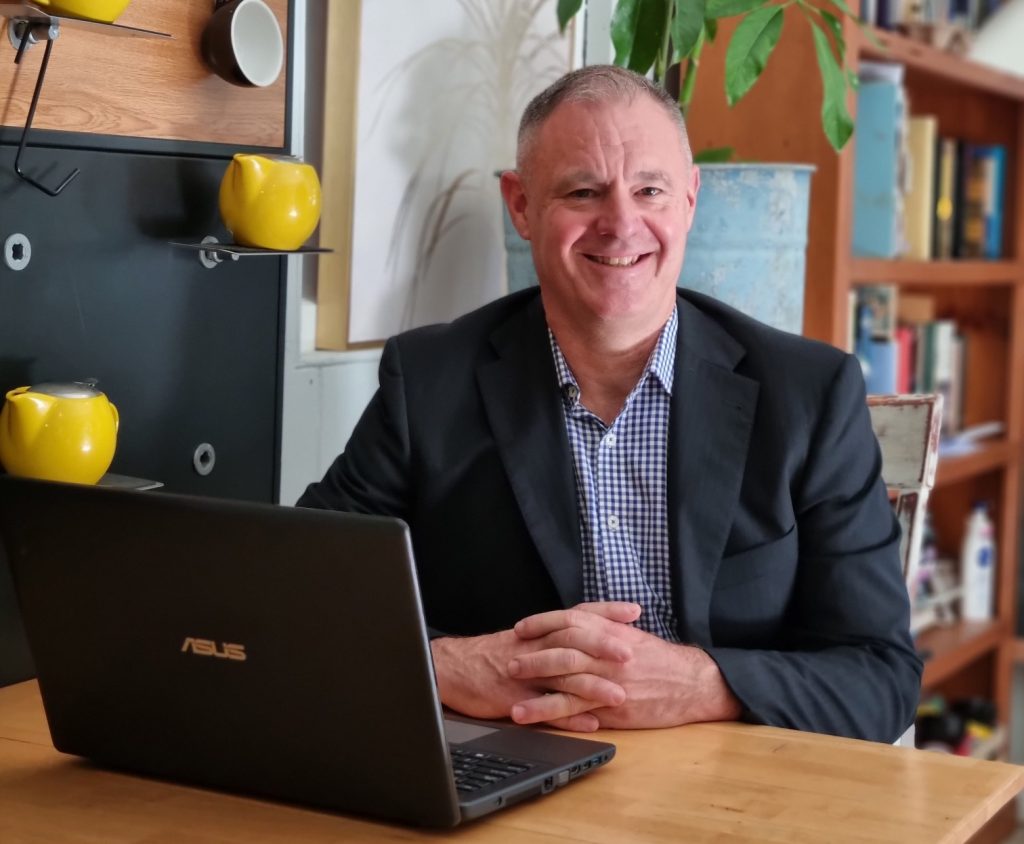
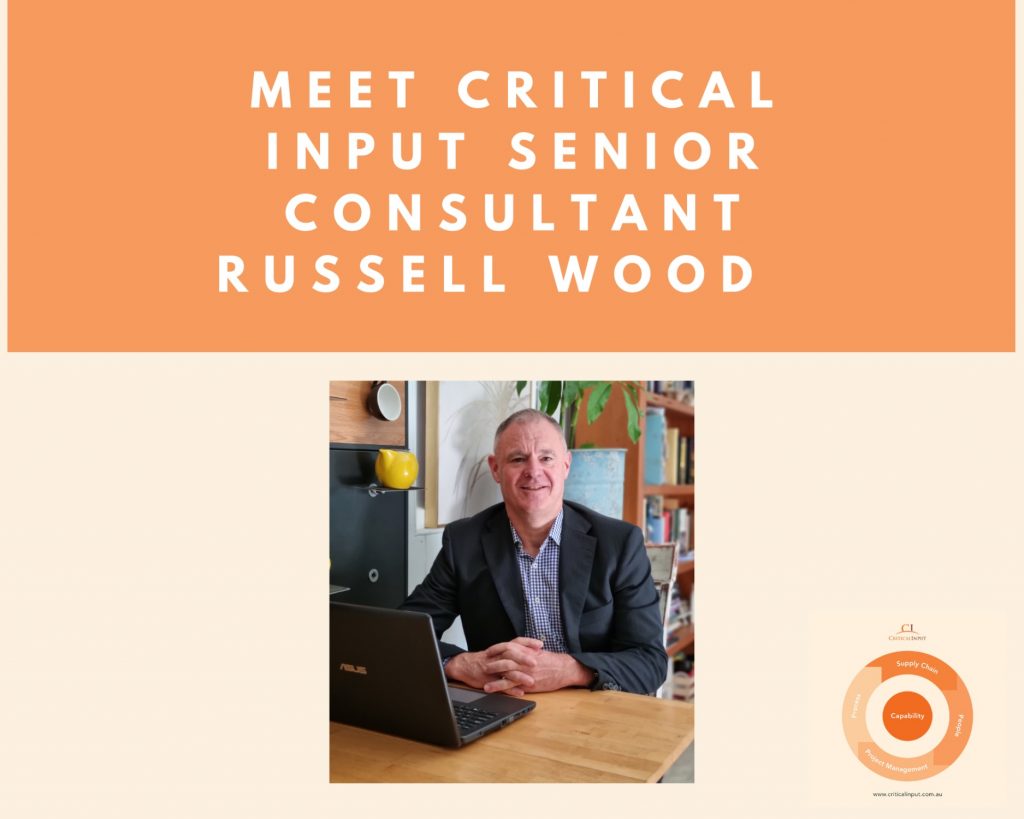
Meet Critical Input Senior Consultant Russell Wood

Russell is a solutions-driven supply chain professional who has been analysing and optimising businesses and their operations for more than three decades. Before joining Critical Input as a Senior Consultant, Russell worked with a number of reputable companies including DHL, Panalpina and Maersk. His strengths lie in client engagement and digital transformation and systems improvement. Russell has successfully delivered both small and large scale projects within manufacturing, retail, mining and Fast Moving Consumer Goods (FMCG) sectors.

 What led you to this type of work?        

After many years working within logistics, I realised there was a need for strategic input around systems or processes for clients working on large projects within supply chain. Service providers within the marketplace were too transactional, and large consulting firms were often too academic (and expensive), so there was effectively a major gap within the market. More importantly, there’s nothing more rewarding or satisfying than undertaking genuine improvement work within a client’s business and making a real difference.

 What do you bring to Critical Input that is unique and beneficial to clients?  

A humble, unassuming, down-to-earth approach and a dogged determination to ensure that things actually work (in a repeatable and standardised manner) within the real world. 

Do you have a particular career highlight?

The system that I designed within DHL (now known as DHLi) was a global-first. It almost didn’t get past the initial feasibility gate, but more than a decade after its adoption it’s still in use today and has a depth of maturity as well as traction globally. The crucial difference was solving a design issue and then persisting until strong market adoption.

Describe a typical day at Critical Input…

A number of calls, meetings (increasingly online during COVID) and exchanges centring on client projects and deliverables, plus developing documentation and outputs for client implementation. We manage to have a good laugh at times in amongst all that and even get to pick the brains of our resident Yoda (Tim G).

 Is there a particular type of work that you enjoy the most?

Genuine improvement work with clients where ego and politics are put aside and mutually pursuing improvement leads to magic happening. This can be small group facilitation, design analysis workshops or coaching. Most clients, most of the time have an idea of what they need to do. They often just lack the capacity, time/resources to get it done. They don’t need a “know-it-all” expert telling them what to do, more likely they need a fresh perspective and someone to partner with them in getting specific improvement done, which, once the heavy lifting is done, they can readily maintain themselves.

What are some of the most common mistakes you see clients make when it comes to people and processes?

This is controversial. Toxic cultures and poor treatment of people in the workplace leave an enduring legacy that inevitably undermines process and people improvement. Whatever systems or process improvement work we’re undertaking, we must begin with the recognition that we’re dealing with thinking and feeling individuals who need to be taken on a journey to a better future state. No amount of systems, technology, or procedures will ever achieve their optimum if we don’t have people on board. Having said that we can’t sit around and sing “Kumbaya” forever either. The famous management consultant, Peter Drucker, nails this with this oft-referenced quote: “culture eats strategy for breakfast”. 

How do you know when you’ve done a good job or when a project has been a success?

When the project delivers what it said it would, and even more so when the results are sustained (minimal degradation over time, no backsliding on the client-side).

If there was one thing you could change about the world, what would it be?

Change the underlying systemic drivers of inequality.

What’s a fun fact about you?

I’ve been into and even played a good deal of “improv” over the years in the form of theatre sports, which is a form of improvised performance art and theatre.

 Core strengths

  • Integrity
  • Analytical thinking
  • Communication/writing
  • Pragmatism.

 Recent highlights

  • Featured columnist of Loadstar Media (loadstar.com) 
  • Recently achieved a major federal grant funding allocation for a struggling business, which turned it around
  • Endorsed consultant for AI Group’s Business Improvement and Growth Hub.

Qualifications

Master of Business and Technology (UNSW)

Memberships/licences

Aus Industry Group BIG Hub (AIG ), Australasian Supply Chain Institute (ASCI), Lean Enterprise Institute (LEI). 

Area of expertise/specialty

Demand Planning (S&OP), Systems Improvement and optimisation (ERP, WMS, TMS).

New Brisbane Office

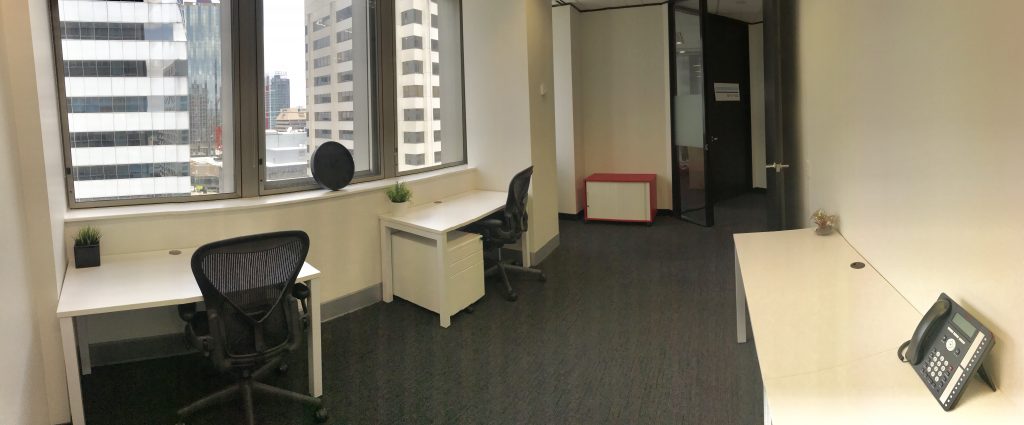
CRITICAL INPUT PTY LTD has taken a lease on a short-term private office in Brisbane’s CBD as part of our flexible working arrangements.

Even though we’re all now masters of the Teams and Zoom calls, we sometimes need to bring our people together face-to-face to enhance collaboration.

There’s a particular project we’re working on right now that prompted us to secure this space, albeit for a short period, at 324 Queens St.

If there’s something that Covid-19 has taught us, it’s to maintain flexibility.

Our new hot desks allow us to do just that while still reaping the benefits of working alongside our colleagues and clients.

Covid-19 has certainly tested our ability to adapt to constant change, but I have to say, I don’t think I’ve ever felt more proud of our team, which is constantly stepping up to deliver important client work while meeting deadlines.

Having already had a few years’ experience working remotely, I feel we have been well prepared for the current uncertain circumstances we’re all experiencing, but we’re excited about this little space that’ll give our Brisbane people a chance to collaborate while changing up their view/Teams backgrounds.

Vaxxed

It’s true. Smart people get vaccinated.

  • Even though CRITICAL INPUT PTY LTD didn’t mandate vaccines, we did a survey of our team last week and discovered that all 27 of our team members had received at least one dose of a Covid-19 vaccine.
  • Despite being dispersed across Qld, WA, SA and NSW, 100% of our team is on track to be fully vaccinated by September 2021.
  • It’s a testament to our shared culture and values.
  • We do this not just for ourselves and our loved ones, but also for our clients and people we don’t even know.
  • Being up-to-date with vaccines ensures we’re at our “agile best” should we need to travel to service client projects.
  • Even though we’ve all had at least one vaccination dose, we continue to follow the guidance of our local jurisdictions around social distancing, masks and hygiene.
  • From the beginning of the pandemic, Critical Input has proactively shared and supported public health messaging.