
Critical Input plants boots on the ground in Darwin

In response to a growing need for mature supply chain expertise, CRITICAL INPUT is setting up shop in Darwin. 

Our newly appointed Senior Consultant Campbell Maclean will head up the new office, which will be located in Darwin’s CBD at 66 Smith Street Darwin. Campbell will be supported by Critical Input’s broader team as we look to expand our network in the Northern Territory.

Our regional analysis has revealed that the Northern Territory offers a range of opportunities for Critical Input across several industries, and with its growing economy and expanding business sector, there is likely to be continued demand for these services in the future.

The Northern Territory, with its vast and diverse geography and significant natural resources, presents many opportunities for both government and private sectors.

Some of the key areas where we’ve identified Critical Input’s expertise can assist in the region include:

  • Mining and minerals: The Northern Territory is rich in minerals, including gold, zinc, and lead, and has a thriving mining industry. Supply chain consultants could help companies in the mining sector to optimise their supply chains, increase efficiency, and reduce costs.
  • Agriculture and horticulture: The Northern Territory has a growing agriculture and horticulture sector, and supply chain consultants could help these businesses to streamline their supply chains, improve logistics and transportation, and enhance their competitiveness.
  • Tourism: The Northern Territory is home to some of Australia’s most iconic tourist destinations, including Uluru, Kakadu National Park, and the Katherine Gorge. Our supply chain experts could help tourist businesses to improve their operations, reduce costs, and enhance their sustainability.
  • Manufacturing: The Northern Territory has a small but growing manufacturing sector, and we could help these businesses to improve their supply chain management and increase efficiency.
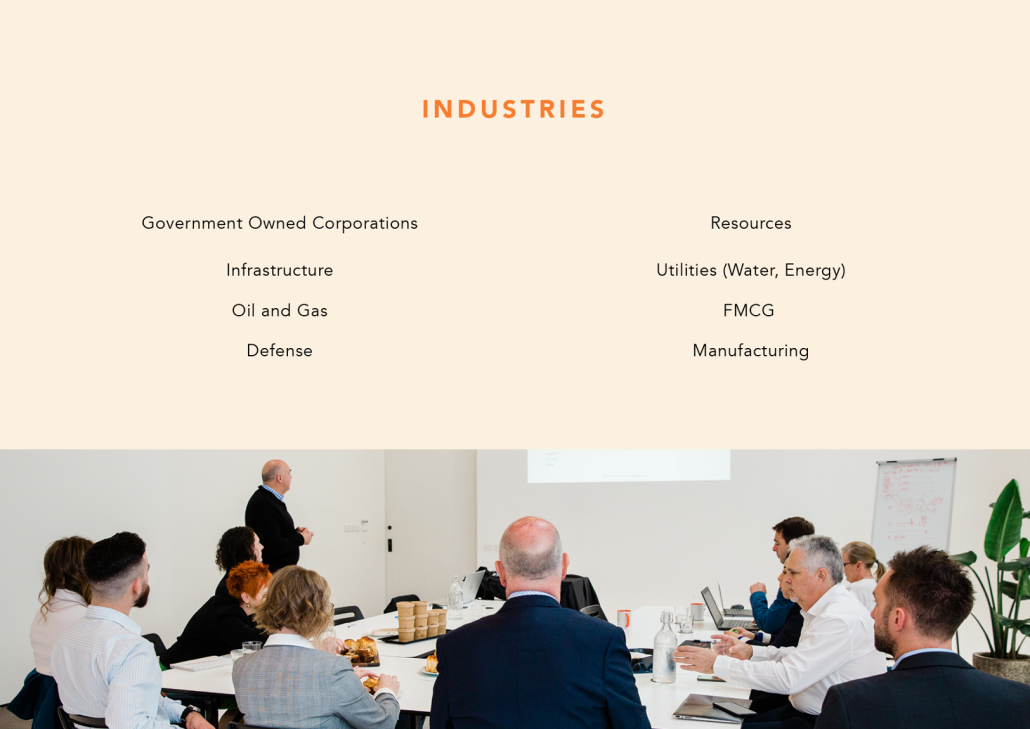
  • Defence: The defence force has significant supply chain needs, and the Northern Territory is an important location for the Australian Defence Force (ADF), with several military installations and training facilities located in the region. Critical Input could support the ADF by helping to optimise its supply chain operations and improve the efficiency and effectiveness of its logistics, risk management, supply chain sustainability and procurement processes.
With Campbell at the helm of Critical Input’s Northern Territory office, we are well positioned for success.

Campbell is excited to be a part of the Critical Input team and is looking forward to making a positive impact on the company’s operations in the region.

He is a highly experienced and accomplished professional with extensive expertise in supply chain and project management.

No stranger to the Northern Territory, Campbell was born in Darwin, with a long working association in the Territory and continues to appreciate the uniqueness of the environment.

He has a proven track record of delivering results in the supply chain and project management space, having worked for some of the leading companies in the industry.

Possessing a deep understanding of the complexities involved in managing supply chains and projects, Campbell has a wealth of experience in implementing strategies that drive efficiency and improve performance.

 

Supporting clients by mapping processes

By Critical Input Senior Consultant Steph Cush

Most business functions keep running because the people doing the day-to-day tasks know what the process is. They do it every day – all the information is in their heads and if there are questions, they usually have the answer. This is a great way of operating until someone important leaves the business or needs to take unexpected leave. Critical Input’s mantra is process, process, process. It’s one thing to have a process, another thing to document it. Critical Input sees huge benefit in getting the information out of people’s heads and onto paper, or in our case “process flows”.

‘As-is’ process documentation

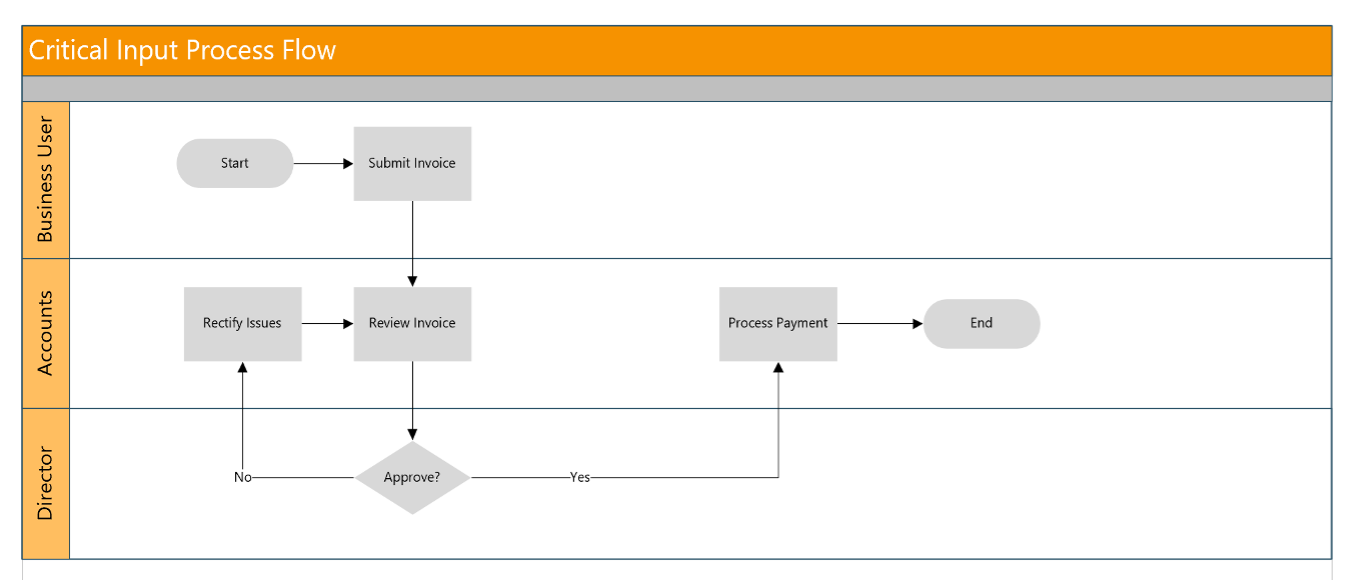
We simply like to start by documenting the “as-is” process – this is what the business currently does. This is key to truly understanding what happens – it identifies both the true volume of work being done, the current pain points and who is responsible for each of these tasks. We ask our stakeholders to write down their process exactly as they see it. It doesn’t need to be fancy, it just needs to include all the key steps of the process as well as who does what. We then get to work pulling these processes into process flows – we often use something like visio (see image). This is a simple yet effective tool that helps to create a great visual of what happens in the day to day functioning of the business unit, separating the steps into swim lanes to show who is responsible for what.

Stakeholder involvement

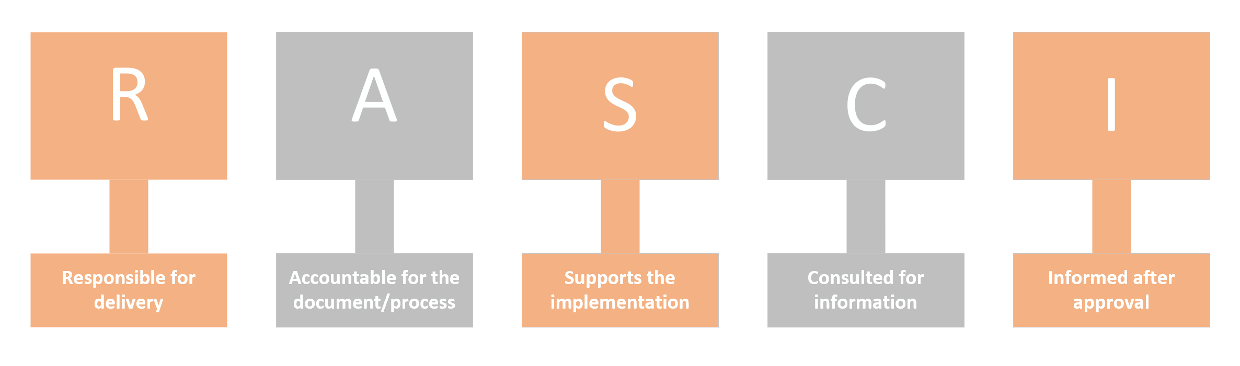
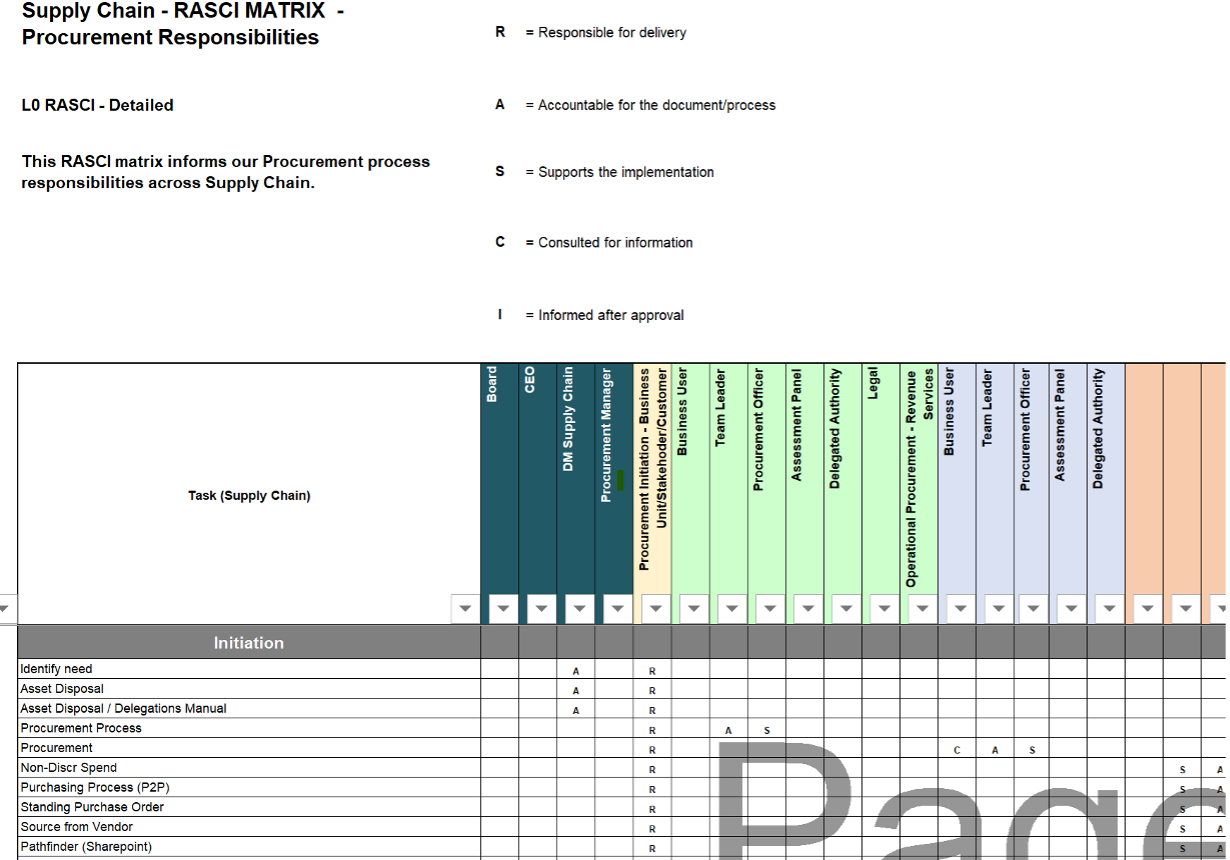
Our stakeholders are key in this step as they can guide us on what happens where – they know the process better than anyone. A lot of stakeholders often haven’t seen their process presented in this way before, and it can highlight just how many steps or touch points their process has. Once the process flows are complete and have been reviewed by our stakeholders, Critical Input will develop a RASCI Matrix (Responsible, Accountable, Support, Consult, Inform). We use the information from the process flows to build out the RASCI.

Using RASCI for clarification

The RASCI is a great tool that we use to help clients illustrate who is, at a minimum, responsible and accountable for each task. A RASCI helps to clarify who should be doing what. Sometimes there are grey areas between who is ultimately responsible for a task and having a RASCI means there is somewhere for the areas to refer back to if they’re ever unsure.


New processes and next steps

A well documented suite of process flows and RASCI that reflect the true state of the business unit process is the result of our process mapping. Next steps – we work with our stakeholders to identify where we can improve on current processes. We’ll offer suggestions based on what we have seen work in the past. We’ll then come up with a set of process flows and RASCI that reflect the “new” way of operating.

Conclusion

Process mapping is an essential component of our service offerings at Critical Input. By documenting the current state of the business unit process, we can better understand what happens, identify pain points, and who is responsible for each task. Through the use of process flows and RASCI, we can clarify roles and responsibilities, providing a clear path for improved operations.


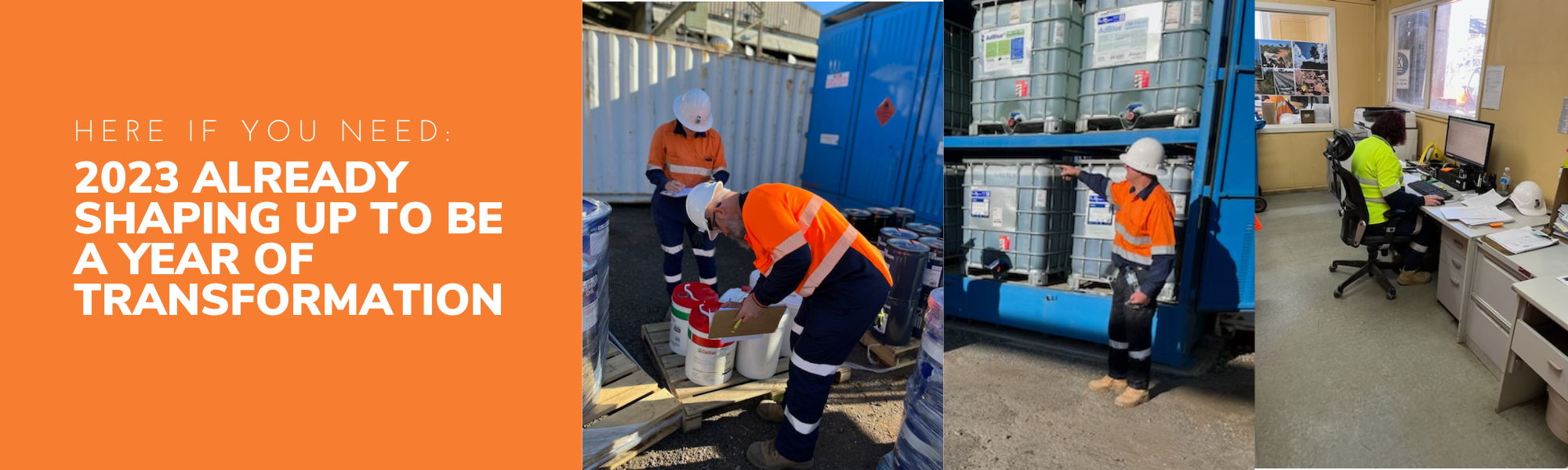
Here if you need: 2023 already shaping up to be a year of transformation

As 2023 kicks off, I am happy to share that Critical Input is off to a strong start with several new transformation projects kicking off in January.

At Critical Input, we’re often asked the question, “How busy is too busy?” The truth is, with our extensive network of professional supply chain resources, we have the ability to provide the right resources at the right time.

Our resources are highly skilled and experienced, allowing for quick ramp up and success across multiple client interfaces.

Some of our key activities for early 2023 include:

  • Supply chain transformation and improvements for various Australian utilities entities
  • Implementing a construction program and services approach for a more streamlined delivery of projects
  • Developing a commercial strategy and providing support for mega projects
  • Developing and providing training and support for a contract management framework
  • Developing contracting strategies for renewable energy projects
  • Improving warehouse and inventory management processes
  • Improving rotables and repairable processes
  • Engaging in global strategic sourcing activities.

And that’s just the beginning.

Our philosophy is all about bringing people and process together. We’re committed to the pursuit of extracting the best out of an operation, project, or process. No matter what type of business or organisation you have, everything is linked to people, which is why any transformation project requires stakeholder buy-in. Education and engagement leads to consistency of application, which is where process comes in.

We’re always looking for new and exciting opportunities to support our clients’ supply chain needs. Please reach out to us to see how Critical Input can help get your organisation’s year off to a flying start.

You can’t manage what you can’t measure: Managing waste and recovering resources on mines and infrastructure projects

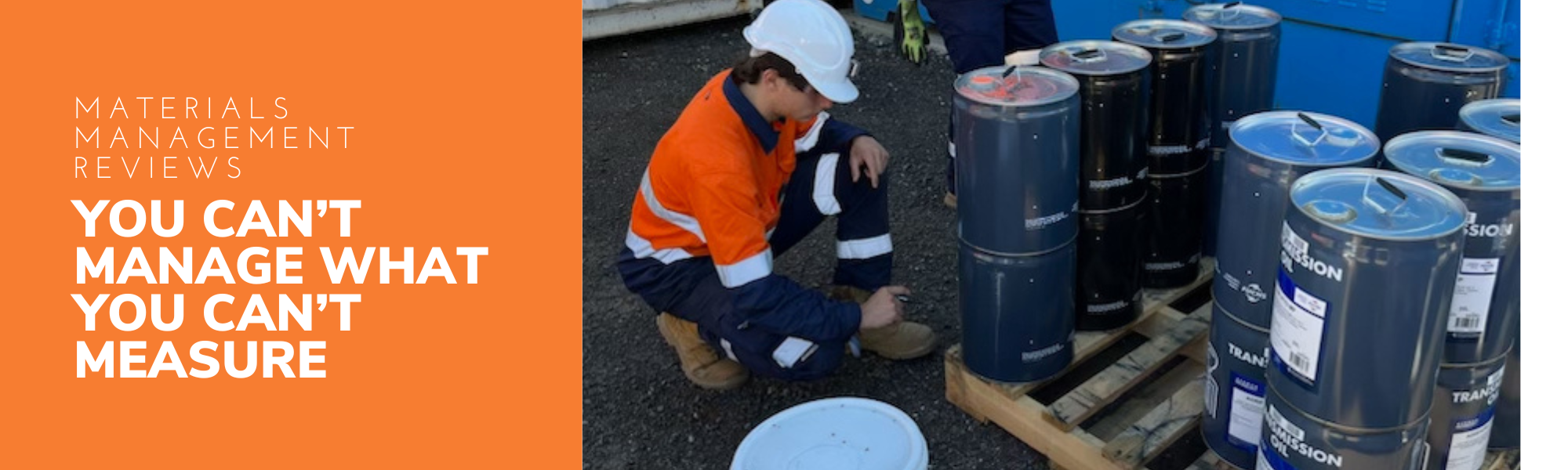
The Critical Input team recently undertook a wall-to-wall stocktake at a mine site as part of our Materials Management Review (MMR) process.

Our Materials Management Review (MMR) helps clients realise value from already purchased materials, such as spare, maintenance and inventory items, that are unknown, under-utilised, or obsolete. The process includes material identification, commercialisation or recycling options, warehouse practices and procedural amendments. So, not only does it save space, monetise waste, but it’s great for sustainability goals too. 

There’s so many reasons to outsource this type of work. Firstly, it’s a massive job. We basically send in a dedicated team to Marie Kondo your work site. Just as sheds and cupboards at home can harbour junk and clutter, so too can workplaces. Add the fact that people move from job to job and different roles within the one company, and it’s easy to understand how sorting out excess pipes, equipment and other materials becomes “not my job” within a busy workplace.

Supply chain waste triggers a multitude of trickle down costs – economic, aesthetic, environmental and efficiency costs. The common denominator behind corporate or industrial waste is a lack of process. Process provides the scaffolding and discipline to manage what an organisation has and what it needs before it acquires more. Industrial waste can lead to millions of dollars spent on goods that sit in warehouses or take up space at job sites, duplicated and forgotten.
At Critical Input, we have seen sites where the contents of boxes, pallets and containers are unused and depreciating in value.

A few years ago, we took on a project with a mining company that hadn’t counted its underground stores for about 20 years.

We found $3 million worth of saleable goods untouched for nearly 20 years. Why? Inventory wasn’t managed. When restructure occurred or people changed jobs, roles and responsibilities relating to the goods weren’t communicated.

Essentially, they didn’t have the processes in place to ensure the efficient management of its supply chain, inventory.

Our MMR is a two-phased approach:

Phase One (duration: two weeks): Critical Input’s Material Management Review Phase One review provides an initial snapshot of your organisation’s physical management of both inventory and non-inventory items across a sample of the various storage locations. This review provides recommendations for additional material identification processes, commercialisation or recycling options, warehouse practices and procedural amendments.

Optional Phase Two: Staged or full review of all storage locations and the implementation of the agreed recommendations overseen by a single Critical Input Senior Consultant. Critical Input conducts Phase Two collaboratively with your team to ensure the organisation retains decision points, knowledge and expertise.

Why do it a Materials Management Review?

You can’t manage what you don’t measure. Multiple storage locations between different work divisions, geographical spread, non-inventory items purchased for completed projects and capitalised components for decommissioned assets are examples of corporate wastage and missed commercial or sustainability opportunities.

Need to Marie Kondo your site during 2023? Get in touch. 


Australia’s steady pair of hands critical to renewable energy transition

As economies around the world address the aftershocks of a global pandemic amidst geopolitical turmoil and an ongoing energy crisis, Australia’s role as a major global supplier of critical minerals will only increase, according to a leading Australian supply chain expert.

Speaking ahead of the The International Mining and Resources Conference (IMARC) to be held on November 2-4, 2022, Critical Input Managing Director Tim Griffiths said while Australia’s mining sector has kept Australia’s economy on an even keel throughout the pandemic and the war in Ukraine, now was not the time not to be complacent.

“Australian industry and government need to join forces to be strategic,” Tim said.

“Australia fared comparatively well during the pandemic, which has further enhanced our international geopolitical image, so increasingly, other countries will be looking toward Australia to shore up secure supply chains.”

A major consideration in the future of supply chains is sustainability, which Tim believes has moved beyond a “trend” to an expectation.

“The United States is investing in renewable energy facilities, smart grids and a robust electric vehicle industry and private companies like Telsa have set an ambitious targets,” Tim said.

“And indeed, it’s likely that Australia’s automobile and electricity sectors will be taking giant leaps towards sustainability and renewables in the short to medium-term.

“EVs and renewables require critical minerals, many of which can be found in Australia.”

The amounts of lithium, cobalt, graphene, indium and other critical minerals needed for low-carbon technologies alone are expected to increase anywhere from 100 per cent to 1,000 per cent by 2050. (The Conversation)

This accelerated pivot is placing pressure on critical mineral supply chains, which are frequently linked to environmental, social and governance (ESG) risks.

COVID-19 exposed vulnerabilities associated with concentrated supply chains and many countries are now seeking to manage this exposure by diversifying its supply chains.

“Australia is seen as a reliable supplier with significant potential to supply an array of critical minerals and battery metals,” Tim said.

“As well as having reserves in the ground, Australia’s depth of experience and expertise in mining means it’s seen as a global supplier of choice for ethically sourced critical minerals.

“So while it’s difficult for mining companies to shift gears, trade complexities between Australia, South East Asia and Russia as well as a push toward renewables are going to mean increased investment in critical minerals and a move away from coal and gas. Companies willing to pivot will be the ones prepared for the future.”

Tim also believes Australia needs to audit its own supply chains in Australia in order to maintain its competitive advantage and reputation as a stable global supplier.

“We need to de-risk our own supply chains by shortening them so we can be more agile as we traverse future challenges,” Tim said.

IMARC X Critical Input

? As GOLD SPONSORS of IMARC, the CRITICAL INPUT team will be attending  The International Mining and Resources Conference (IMARC) at the ICC Sydney from 2-4 November 2022.

? As well as exhibiting at the show, which has been postponed three times due to Covid-19, I will be speaking about contemporary risks and rewards for the industry including supply chain management, sourcing agile project teams and curating clever procurement strategies.

? Be sure to drop by our stand (#N21) if you’re in town visiting this long-awaited event.