Critical Input sets up ‘second headquarters’ in WA

Boutique business consulting firm Critical Input is ramping up its presence in Western Australia, citing confidence in the state government’s management of the pandemic as one of the key deciding factors for its investment in the region.

Critical Input, which delivers project, supply chain and change management expertise to government infrastructure and private resources sectors, now has two senior consultants along with an agile talent pool of 18 vetted professionals on its west coast team.

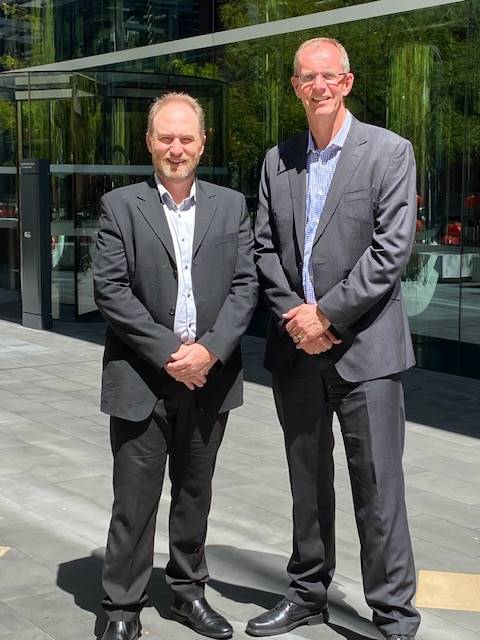
Critical Input’s Managing Director Tim Griffiths said WA was a strategically important region and was in effect, acting like a “second headquarters” for his Queensland-born company. 

“WA’s financial input accounts for about 15 per cent of Australia’s GDP, which makes WA a crucial state for the entire country’s prosperity,” Tim said. 

“This economic muscle twinned with WA’s firm stance on COVID-19 and its ability to close borders with fewer complications than those that have occurred on the east coast, has meant WA has remained open for business with only minor interruptions.” 

Critical Input, which has enjoyed a long relationship with WA businesses across mining and heavy industries, had already planned on consolidating its presence within the region during 2020 with the onboarding of Senior Consultant and Business Manager Henk de Vos.

Initially, the black swan event of COVID-19 paused Critical Input’s expansion plans, but it’s now doubling down given the WA Government’s solid management of the pandemic and the stability that’s delivered.

Boots on the ground

“We didn’t want to be relying on ferrying east coast resources over, which is too risky given how quickly Covid-19 restrictions can change,” Tim said.

“Distance and location make the WA business market somewhat unique and it’s essential to have boots on the ground.

“The Western Australian office will become a second headquarters for Critical Input, with the WA team also supporting satellite operations in South Australia and Northern Territory.

“We’ve already set up a customer relationship management (CRM) system for WA as well as SA and NT to ensure our agile workplace is primed for success.”
The local team

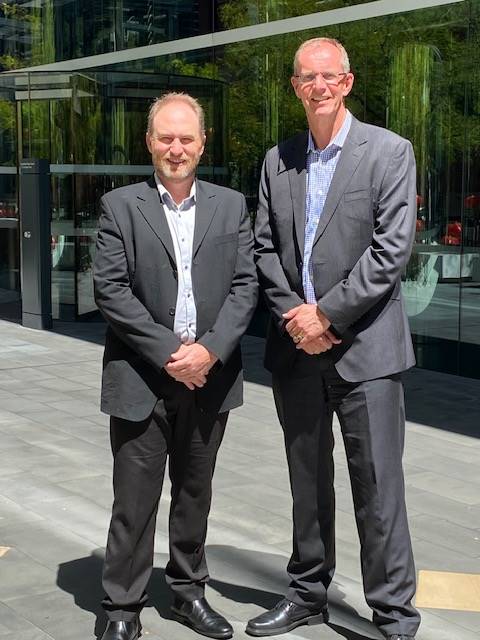
People on the ground include Senior Consultants Henk de Vos and James Brown (yes, that’s his real name) plus an agile talent pool of 18 vetted consultants.

“We’re predicting a mini post-Covid-19 boom, which we’re already seeing evidence of with increased demand for project managers, supply chain experts and change management consultants,” Tim said.

“Our WA people have been building on Critical Input’s client network and putting in place the necessary resources for further expansion.

“The goal is to have a hefty pool of senior expertise ready to service clients remotely or in-house. WA is home to some of the world’s leading mining and resources talent, so we’re fortunate to be able to draw on such impressive expertise.”

What’s Critical Input’s elevator pitch?

Critical Input is often asked what differentiates it from other consultancy firms; it’s a simple question, but the answer isn’t straightforward.

While other consultancy firms reference clients, projects delivered and depth of knowledge, it’s Critical Inputs’ indisputable deep expertise and commitment to a bespoke service that separates it from other consultancy firms.

Critical Input is a boutique consultancy service offering process improvement and project management and supply chain activities. It works in sectors from water and energy, to mining and heavy industry.

“Each one is senior in their experience, so they can hit the ground running. Critical Input takes a simple approach to allow organisational enablers – both people and processes – to improve activities,” Tim said. “We see that as critical – hence the business name.”

“Each one is senior in their experience, so they can hit the ground running. Critical Input takes a simple approach to allow organisational enablers – both people and processes – to improve activities,” Tim said. “We see that as critical – hence the business name.”

Whether it’s advisory, project management, change management or process and supply chain reviews, Critical Input offers hands-one operational experience gained across the full business spectrum. Critical Input’s Managing Director Tim Griffiths has handpicked a team that can provide the right resources, the right skillset and the right mindset. 

“Each one is senior in their experience, so they can hit the ground running. Critical Input takes a simple approach to allow organisational enablers – both people and processes – to improve activities,” Tim said. “We see that as critical – hence the business name.”

Managing Director Tim Griffiths said Critical Input only hires proven experts who’ve held senior roles in leading Australian and international companies. 

“They’ve witnessed first-hand both successful and unsuccessful business improvement (BI) projects, so know the common mistakes and pitfalls and how to navigate and mitigate them,” Tim said. “We’ve got good national coverage with a recently bolstered WA team so our consultants can be placed in-house or work remotely depending on the role or project.”

No alt text provided for this image

Critical Input’s WA-based Business Manager Henk de Vos said the Critical Input team can build the roadmap and fill the gap between a client’s current processes, systems and skills and the desired strategy.

“Critical Input’s team knowledge augments existing client resources to ensure both business-as-usual and business improvement projects can be delivered in parallel without putting undue pressure on in-house teams,” Henk explained. “We’re all ex-industry professionals with a hard-earned skills and experience that support and benefit our clients.”

 Tim explained he believed in delivering value to clients, which is why Critical Input has fostered such solid long-term relationships.

“In summary, the key differentiator between Critical Input and other consultancy firms is its depth of knowledge gleaned from many years of hands-on operational experience,” Tim said. “It’s something that is earned from delivering the work, rather than delivering an elevator pitch.”

At the centre of everything Critical Input does are three principals: process, because without process, there is no destination; people, because without buy-in, there is no evolution; and principles – because integrity is everything. 

No alt text provided for this image

Critical Input’s national team includes:

  • Tim Griffiths, Managing Director
  • Henk de Vos, Business Manager WA, SA, NT
  • Trevor O’Neill, Business Manager, NSW
  • James Brown, Senior Consultant
  • Tom Whiting, Senior Consultant
  • Melissa Kimlin, Senior Consultant
  • Chris Bevin, Senior Consultant
  • Adrian Calligaris, Senior Consultant
  • Plus a team of other dedicated senior consultants, associates and project support officers.

The costs of modern slavery

Modern slavery is a term that would be abhorrent to most Australians – but how much is the average person willing to pay to prevent it?

It’s an issue that’s driving more and more companies to put their supply chains under the microscope.

Critical Input Managing Director Tim Griffiths has been diving into some of the big questions challenging today’s in-house procurement managers and supply chain strategists.

“Everyone loves a ‘made in Australia’ stamp, but who is really prepared to pay for it?” Tim asked.

Real vs perceived risks

These include the real and perceived risks around modern slavery, geopolitics and manufacturing locally.

“You could argue that with the civil unrest due to a convergence of several factors, the United States of America poses more risk than China,” Tim said.

“Also, while there’s a perception that South-East Asian suppliers are within the modern slavery category, what percentage actually are?

“Manufacturing is a mature industry in many Asian countries and reputable manufacturers are scrutinised to ensure they meet ethical standards and expectations.”

Another side of the modern slavery coin was Australians’ love affair with cheap technology, clothes and other items.

“Everyone loves a ‘made in Australia’ stamp, but who is really prepared to pay for it?” Tim asked.

“If there was ever a black swan event that made the world revise their supply chains, Covid-19 is it,” Tim said.

COVID-19 presents an opportunity

The COVID-19 pandemic could be an opportunity to reset long-accepted practices and make positive changes within the procurement industry.

“If there was ever a black swan event that made the world revise their supply chains, Covid-19 is it,” Tim said.

“Not only did the spread of the virus highlight our global interconnectivity, but it also put a magnifying glass on vulnerabilities in supply chains and processes.”

Looking for solutions

Other questions Tim encourages organisations to discuss include:

  • How can in-house procurement managers drive behavioural changes?
  • What are some of the systems that can be put in place to assess modern day slavery risks?
  • Should the government be leading the charge on developing local manufacturing and innovation industry, or should this be left to private sectors?
  • How could government, the education sector and industry better collaborate?
  • Should we be taking this opportunity to become the architects of Australia’s future industries?
  • Is this a chance to strive for environmental and sustainability goals?
No alt text provided for this image

Critical Input Supply Chain Review service

Now, more than ever, organisations need to understand the status of their supply chain. That’s why Critical Input offers a Supply Chain Review Service. This quick, external review provides valuable data and evidence for improvements or changes.

What’s a Supply Chain Review?

Critical Input’s Supply Chain Review (SCR) service provides a snapshot of your organisation’s supply chain, it’s maturity and what improvements may be required. It’s not seen as an audit, nor does it take on audit principles.

The qualified and quantified review looks at all elements of your end-to-end supply chain and captures its capability and capacity, then recommends opportunities for improvement if required.

We see the below functions as part of the end-to-end supply chain spectrum:

  • Management
  • Strategy
  • Procurement
  • Purchasing
  • Contracting
  • Contract management
  • Category management
  • Vendor management
  • Demand management (interface with capital and operations)
  • Inventory
  • Master data management
  • Warehousing
  • Logistics.

Critical Input Supply Chain Review service

Supply chains have been around since Noah outsourced component production for the ark.

They’re a great way to ensure cost and time-effective production. But is your company’s supply performing in such a way that it provides optimum benefits?

Now, more than ever, organisations need to understand the status of their supply chain. That’s why Critical Input offers a Supply Chain Review Service. This quick, external review provides valuable data and evidence for improvements or changes.

What’s a Supply Chain Review?

Critical Input’s Supply Chain Review (SCR) service provides a snapshot of your organisation’s supply chain, it’s maturity and what improvements may be required. It’s not seen as an audit, nor does it take on audit principles.

The qualified and quantified review looks at all elements of your end-to-end supply chain and captures its capability and capacity, then recommends opportunities for improvement if required.

We see the below functions as part of the end-to-end supply chain spectrum:

  • Management
  • Strategy
  • Procurement
  •  Purchasing
  • Contracting
  • Contract management
  • Category management
  • Vendor management
  • Demand management (interface with capital and operations)
  • Inventory
  • Master data management
  • Warehousing
  • Logistics.

What are the benefits of a SCR? 

Efficiency is all-important in every area of business, especially supply chain where even small changes can pay huge dividends in terms of cost, process improvement, time and value.

The most common elements Critical Input’s SCR specialists find include:

  1. Lack of process
  2. Lack of systems integration
  3. Roles and responsibilities not fully understood
  4. Role of supply chain in the organisation downgraded.

Modern Day Slavery is another risk factor. A number of Australian laws require businesses to comply with human rights standards. Yet companies can unwittingly breach these standards through an inadequate understanding of their supply chains.

A professional SCR will help to uncover all of these elements, so they can be addressed.

How Critical Input’s SCR service can help

Many large consultancy firms claim to be supply chain experts, but rarely do they provide qualified or operationally experienced personnel for a SCR.

Critical Input’s SCR team consists of senior supply chain experts with decades of experience in a variety of industries including infrastructure, manufacturing, resources and government. They’ve been “burnt” enough to understand what works and what doesn’t when it comes to supply chain optimisation.

Our SCR experts work with your team and organisation to align the business’s drivers and industry. We obtain verified answers through detailed discussions, document and process reviews. The “deep dive” results in a complete picture of the entire supply chain.

It’s NOT an external audit that results in a “tick and flick” exercise. By becoming embedded in your team, we establish a holistic, thorough and accurate view of your supply chain and its strengths and weaknesses.

The SCR Format

Is this a one-size-fits-all service?

Critical Input has SCR solutions options to suit your organisation’s unique needs.

Full SCR

About 500 detailed question sets covering all elements of the supply chain

  • Verified answers
  • 7-10 day timeframe
  • Can be customised to only Procurement, Logistics, Inventory, Supply Chain Management or a combination.

Deliverables:

  • Results of review – checklist, answers and verifications
  • Detailed report
  • Outcomes, recommendations, actions and tangible benefits analysis
  • Draft for review and then detailed report.

Lite SCR

About 130 high level questions covering all elements or segmented to elements that reflect the organisation

  • Verbal discussions and reviews
  • 1-3 day timeframe
  • Standardised process and approach.

Deliverables:

  • Results of review – the checklist
  • High-level recommendations – presentation
  • Review with Management – outcomes and recommendations.

Is it the tool or the tradesperson?

By Critical Input Senior Consultant Henk de Vos.

The shiniest new hammer on the market won’t help if what you really need is a screwdriver.

Far too often businesses get sold on the wonders of the latest and greatest software solution, only to find that it doesn’t deliver what they expected or needed.

And little wonder when, no matter how impressive the system is, not enough thought has gone into considering the real problem and its causes before rushing out to invest in what we call a “shiny rock” solution.

Why then do so many system optimisation or transformation projects fail to deliver the expected benefits?

It all looked so promising

No alt text provided for this image

You researched the market, shortlisted the best solution providers, rated their presentations/demonstrations and validated their claims with their nominated reference sites. It was the best thing since sliced bread (and shiny new hammers). So, you finalised the business case for what appeared to be the best system (software solution) for your company.

But six to 12 months later the system has not delivered the expected outcomes. The Business case benefits are simply NOT being delivered. In fact, the new processes and systems are performing worse than the original processes and systems.

You did everything you could to validate the new system, but it’s failed to deliver the expected benefits. It’s not a lemon. It works. It’s just not delivering what you need – the aforementioned screwdriver.

Why did it all go so wrong?

Most of the time new system projects fail because companies have been sold on the perceived benefits that the new system appears to offer. The salesperson didn’t lie, the company simply saw a glittering product with plenty of whiz-bang features – just not the ones that they needed to solve the underlying problem that prompted them to upgrade their system in the first place.

What they failed to understand was the complexity of the processes, systems, data structures and system interfaces that were already in place. Most importantly, they didn’t understand or consider the actual process/systems (knowledge) controlled by people.

This knowledge isn’t documented or understood by senior management. It’s the combined intellectual property held by the broader team that makes the current systems work.

So, who’s to blame?

There’s an old saying that “a bad tradesperson blames their tools”, and this is often exactly what happens when system upgrade projects fail to deliver what was needed.

The project steering group blames the new software, blames the consultants, blames the implementation team, blames the functional team and eventually it blames the project management team. In reality, the blame lies with the person/s who believed that the shiny new tool would fix all their existing problems instead of looking at their root cause.

What’s the solution? Hint: It’s not a shiny rock

First, it’s vital to understand the “as is” system and its shortcomings thoroughly by looking at how the existing processes and systems work. Equally important is to know who makes it work.

The second step is to employ additional resources to conduct the “as is” review rather than relying on the in-house team.

This is for two reasons. One, it provides an independent review not clouded by the preconceptions of a person, team, department or process and, two, the in-house personnel have day jobs and they will have to sacrifice the performance of that job – or the systems project!

Once you have a very clear understanding of the existing processes and systems, you can prepare the gap analysis. This will be what you have to consider, address and rectify before you can implement the new system.

Make sure you establish the stage gates aligned to the identified gaps, to ensure that the gaps have been incorporated into the project.

Don’t fall at the final hurdle

Be prepared to delay the go-live if these gaps haven’t been addressed and review the whole project if they can’t be addressed.

Ensure that you have enough resources to manage the business’s day-to-day functions, as well as the project.

Communication is key to the success of any project, so make sure that you continually update everyone in the company about the benefits, impact on the “as is” and their future roles. Taking the whole team on the journey is a major factor in ensuring its success.

Above all, make sure that everyone is suitably trained and confident on how to use the new system.

The CRITICAL Input team has many years of experience gained across multiple optimisation and transformation projects and is ready to help deliver successful projects, leaving your team to get on with doing what they do best.