Vocal about keeping it local

Critical Input Managing Director gets vocal about keeping it local

Critical Input Managing Director gets vocal about keeping it local

In an era where large overseas consultancies are increasingly acquiring Australian firms, it’s becoming harder for businesses to ensure they’re truly supporting local enterprises.

The recent integration of the formerly Brisbane-owned consultancy into global group is a prime example of this trend.

Critical Input Managing Director Tim Griffiths said while such mergers bring about global expertise, they often dilute the local essence that many Australian companies value.

“Critical Input remains firm in its commitment to being 100 per cent Australian and 50 per cent Indigenous Australian-owned,” Tim said.

“This ownership structure is not just a statistic – it represents a deep-rooted connection to the local community and a dedication to contributing positively to the Australian economy.”

Keeping it local in a globalised economy

According to Tim, “local content” is more than a regulatory requirement.

“It’s about fostering genuine relationships with Australian suppliers and stakeholders and deeply understanding the nuances of our culture, which differ from state to state,” Tim said.

“It’s why we have boots on the ground across Brisbane, Sydney, Darwin, Adelaide and Hobart.

In a market flooded with global players, maintaining an Australian identity ensures that clients receive services that are not only world-class but also resonate with local values and needs.

The Indigenous ownership of Critical Input is particularly significant in promoting diversity and inclusion within the business landscape.

“As global consultancy firms continue to expand their footprint in Australia, it is crucial for businesses to critically assess their partners,” Tim said.

“Critical Input’s approach to business process improvement, organisational redesign, and supply chain optimisation is grounded in local expertise.

“By leveraging an intimate knowledge of the Australian market, Critical Input provides solutions that are both innovative and practical, ensuring that clients’ operations are optimised to meet local demands.”
 

A vent about my pet peeve – corporate waste

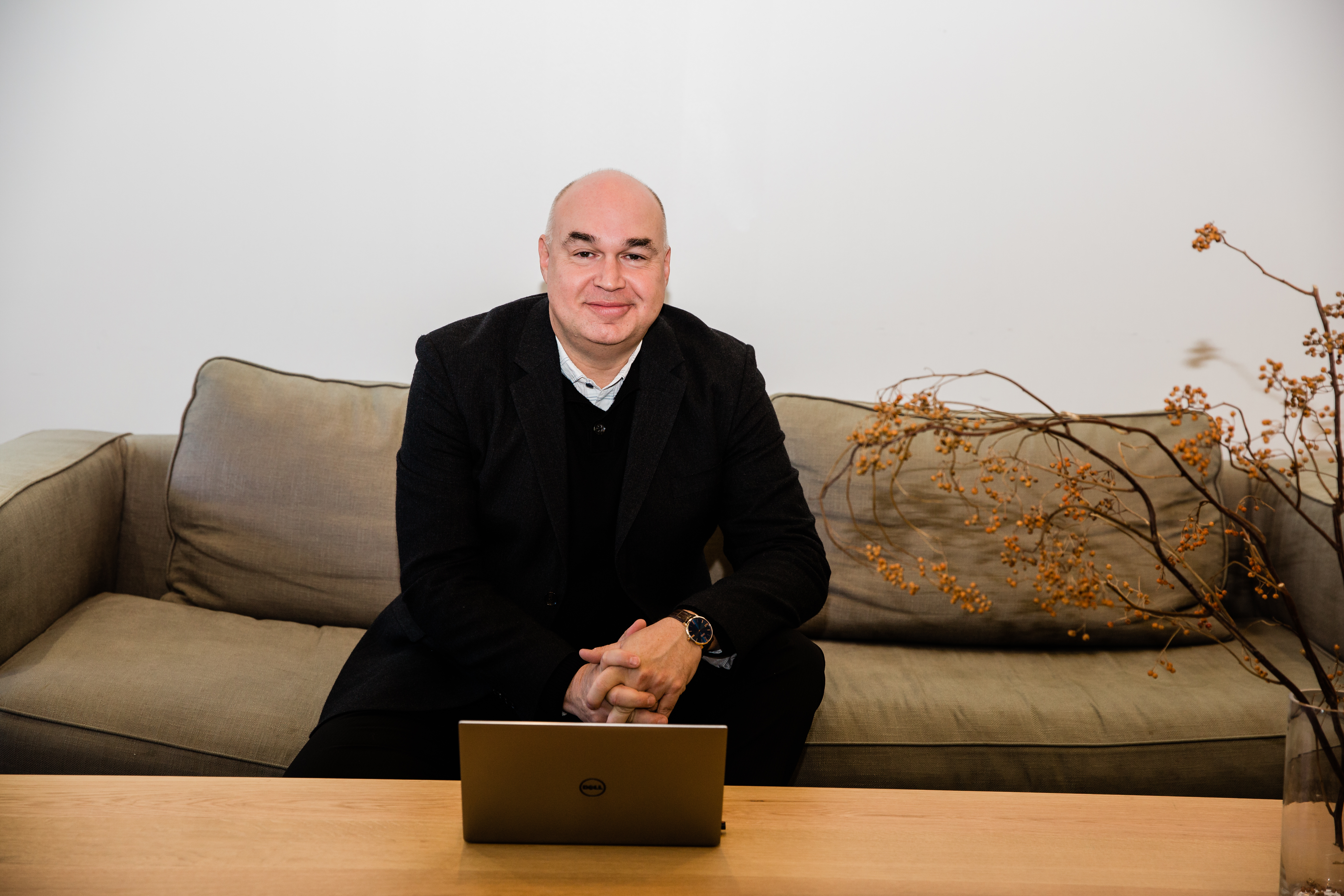
Pictured: Critical Input Managing Director Tim Griffiths

As the Managing Director of Critical Input, I’ve witnessed firsthand the challenge businesses face with corporate waste, ranging from unused goods in warehouses to resources squandered on inefficient processes.

The cost of this waste is not just financial; it impedes sustainable growth.

However, the remedy to this pervasive issue lies within a powerful duo: people and process.

In my experience, the core of corporate waste is often a lack of defined processes.

Without these, organisations struggle to manage resources efficiently, leading to significant waste.

But establishing processes alone is insufficient. They need to be embraced by the people within the organisation to affect real change.

At Critical Input, we prioritise not just the creation of systems but ensuring these systems are integral to our clients’ operational culture. This involves identifying key personnel – the movers, shakers, influencers, and change-makers – and bringing them along for the journey.

We dedicate time to engage and align with these critical figures, ensuring that any new or enhanced systems are not only implemented but sustained and woven into the fabric of the company’s daily operations.

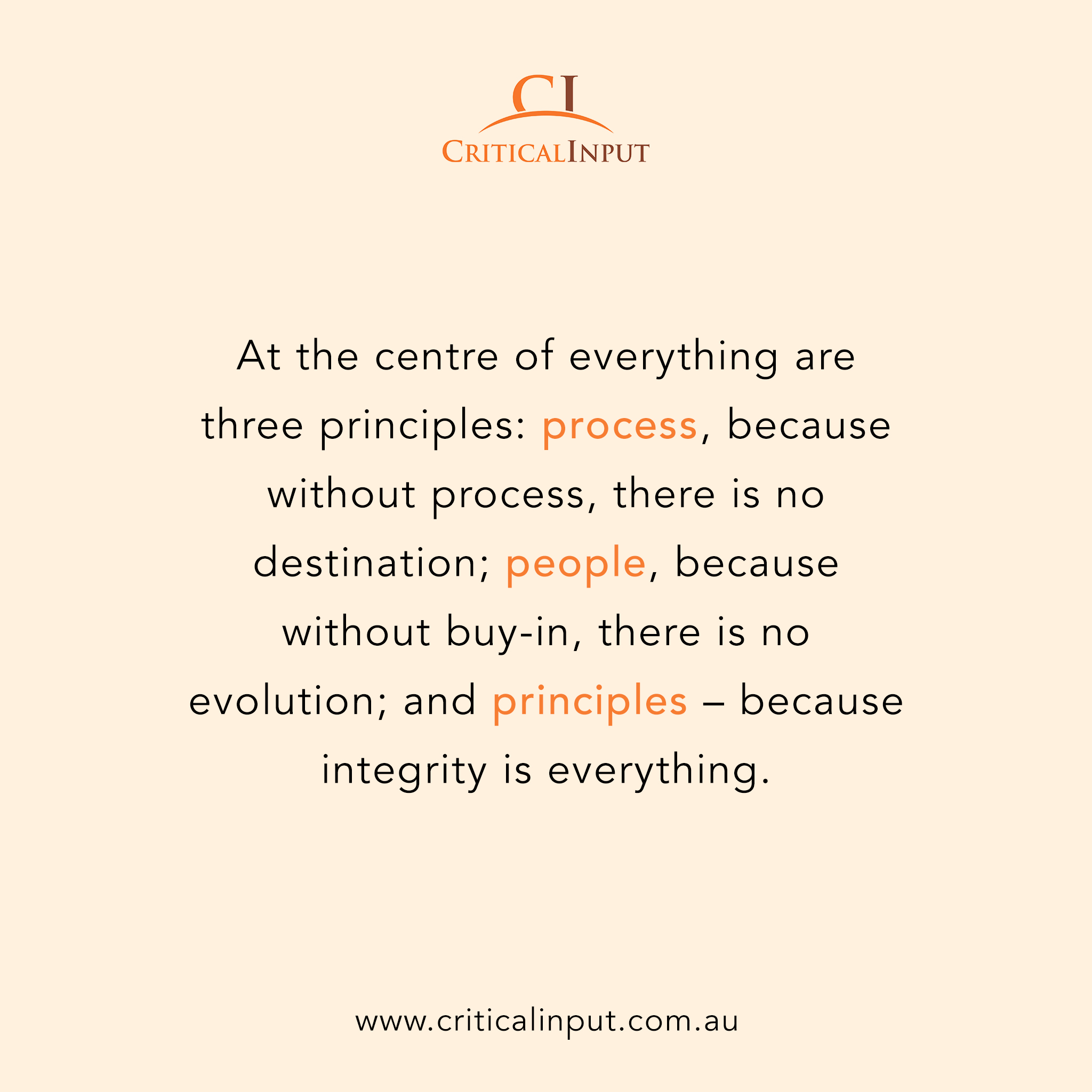
Our approach is built on three fundamental principles: process, because without it, there is no destination; people, because without their buy-in, there is no evolution; and principles, because integrity is everything.

This straightforward yet effective methodology allows us to help our clients – from sectors like water, energy, mining, to heavy industry – not only reduce waste but achieve lasting success.

Understanding and harnessing the synergy between people and process can break the cycle of waste, paving the way for a sustainable corporate environment and, ultimately, a healthier planet.

But sometimes if waste has accumulated to the point of becoming unmanageable, organisations may need a ‘done for you’ service in the form of a Materials Management Review (MMR).

At Critical Input, we’ve encountered sites cluttered with unused boxes, pallets, and containers, sometimes holding substantial value. For instance, during a project with a mining company that hadn’t audited its underground stores in 20 years, we discovered $3 million worth of saleable goods that had been gathering dust.

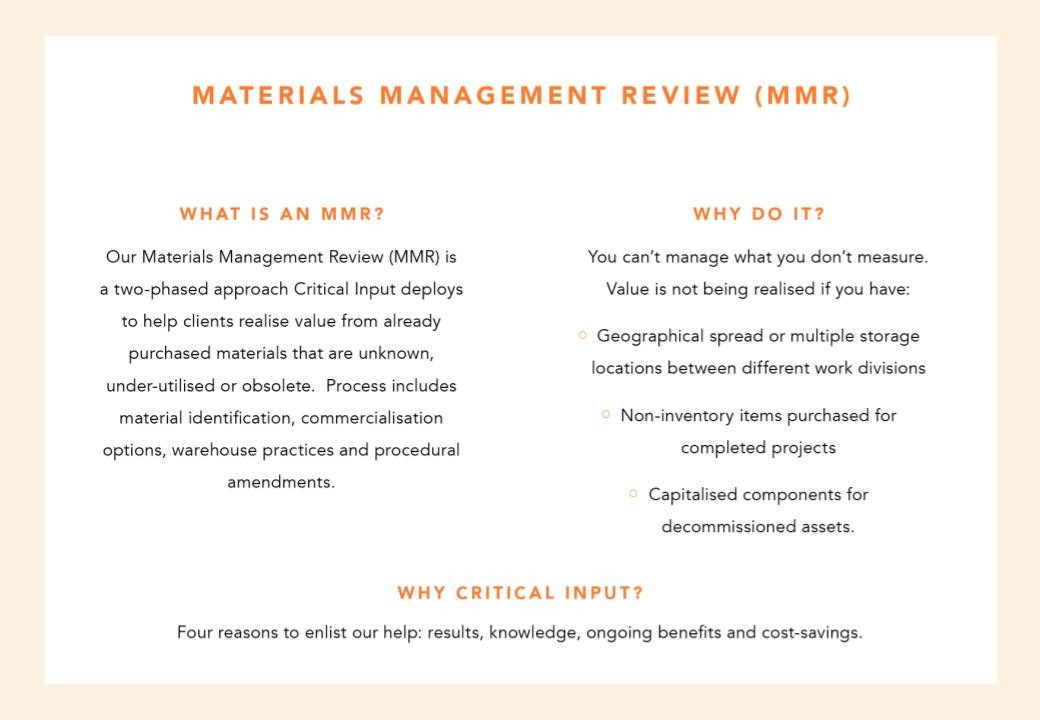
Our team recently conducted a comprehensive MMR at a mining site. This wall-to-wall stocktake is designed to unearth value from materials that are unknown, under-utilised, or obsolete.

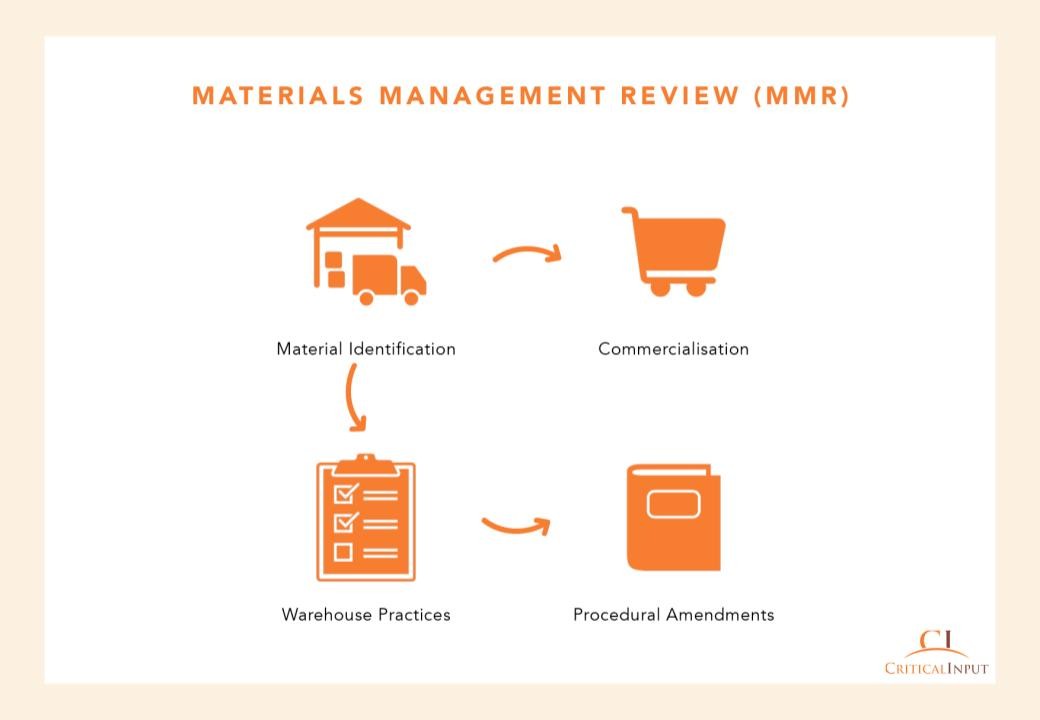
The process spans material identification, assessing commercialisation or recycling options, and revising warehouse practices and procedures. Not only does this help clear space and monetise what might otherwise be considered waste, but it significantly bolsters a company’s sustainability efforts.

The necessity for outsourcing such tasks stems from the sheer magnitude of the undertaking. Consider it akin to Marie Kondo’s method, but for industrial sites.

Workplaces, like homes, can accumulate excess, which often becomes overlooked as personnel shift roles or move on. Without a dedicated team to manage this process, excess materials can quickly become “nobody’s job.”

The repercussions of supply chain waste are multifaceted, impacting economics, aesthetics, the environment, and operational efficiency.

Our MMR process is a methodical, two-phased approach:

Phase One: Offers an initial review of your organisation’s management of inventory across various storage locations, providing actionable recommendations.

Phase Two: Is optional and involves a thorough review and implementation of recommended changes, ensuring that knowledge and control remain with your team.

Why undertake a Materials Management Review? The simple answer: You cannot effectively manage what you don’t measure. Between geographical spread and various work divisions, the potential for corporate wastage and missed opportunities is vast.

If your site could use a “Marie Kondo” makeover in 2024, consider how our MMR could streamline your operations and enhance your sustainability credentials.

Balancing books and building success: the synergy that fuels Critical Input

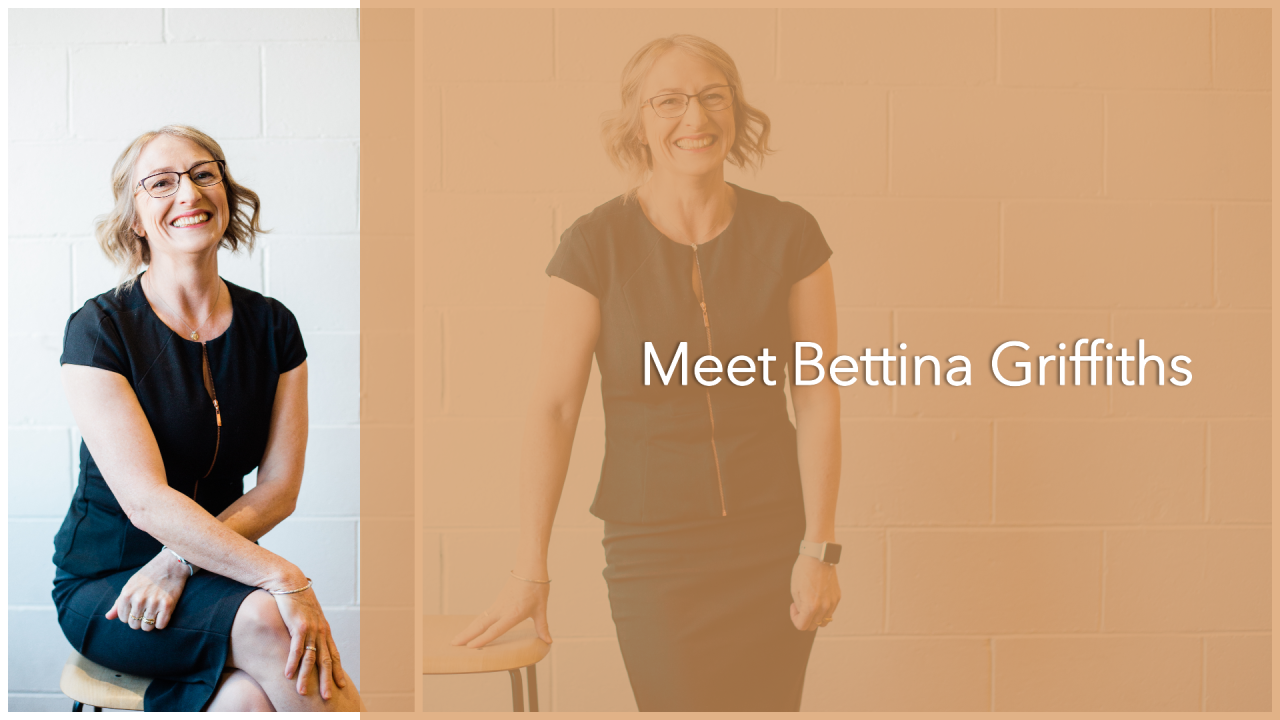
Meet Bettina Griffiths, the Co-Founder of CRITICAL INPUT, and the wife of Managing Director Tim Griffiths. Initially, Bettina’s role was to ensure a stable home life, enabling Tim to focus entirely on the business. Recognising her affinity for numbers, she later took on accounting responsibilities, thus playing a crucial role in facilitating business growth. Beyond her official duties, Bettina views her primary contribution as the unwavering support she provides to Tim, which she believes is foundational to the company’s success. Her story is one of behind-the-scenes strength and steadfast partnership, contributing significantly to Critical Input’s journey and achievements.

Can you share a bit about your journey with Critical Input from start-up to now?

My journey with Critical Input began with supporting Tim to ensure he could fully dedicate himself to our business. As the company evolved, I found my niche in accounting and payroll, which allowed me to contribute more directly to our growth. My role has expanded over the years, but the essence remains: supporting our team and facilitating our company’s success.

As a co-owner of Critical Input, what are your day-to-day responsibilities and how do you contribute to the company’s success?

My primary responsibilities include managing accounting and payroll duties, laying a financial foundation for our team’s success. Beyond these tasks, my most significant contribution has been my steadfast support for Tim. This support has been crucial in navigating our company’s growth and overcoming challenges.

Critical Input has a unique gender pay gap, with women earning more than men. Can you discuss how this came about and the impact on company culture?

The gender pay gap at Critical Input wasn’t intentional but evolved naturally. Our focus has always been on merit and the ability to perform, regardless of gender. This approach has fostered a culture of respect and appreciation, contributing to a diverse and equitable workplace.

Can you share a particular highlight or achievement that you are proud of since you’ve been working with Critical Input?

My proudest achievement is my unwavering support for Tim, which I believe has been pivotal to his and consequently our company’s success. This support has enabled us to overcome numerous challenges and achieve significant milestones together.

Looking ahead, what do you envision for the future of Critical Input?

I see Critical Input continuing its growth trajectory while exploring new avenues for expansion. Diversifying our offerings and entering new markets aligns with our vision for sustained growth and evolution.

What’s it like working with Tim? Critical Input has been through rapid growth in recent years – how do you two switch off or wind down?

Working with Tim has been a journey of synergy and collaboration. Despite the pressures of rapid growth and business demands, we find respite in our shared passion for travel and individual hobbies, helping us to unwind and maintain our strong partnership.

If there was one thing you could change about the world, what would it be?

I would advocate for the fashion industry to abandon fast fashion in favour of using only natural materials. Despite occasional compromises due to limited options, I strongly believe in supporting sustainable practices and companies that share this vision across their entire supply chain.

Technic LEGO Group giveaway winner: Anup Venkatesh from ElectraNet

Technic LEGO Group giveaway winner: Anup Venkatesh from ElectraNet

We are excited to announce that Anup Venkatesh from ElectraNet Pty Ltd is the lucky winner of Critical Input’s Technic the LEGO Group giveaway, held during the recent Energy Networks Australia Conference in Adelaide.

Unfortunately, Anup could not collect his prize in person, so his colleague, Bart (pictured behind Anup’s headshot here), graciously accepted the Technic LEGO set on his behalf.

This event has been an excellent opportunity for Critical Input to engage more deeply with industry professionals and to showcase our commitment to contributing positively to the energy sector’s landscape.

We look forward to more such interactions and continuing our efforts to drive innovation and collaboration within the industry.

Hope you enjoy building your chopper Anup!

And a shout out to Steph Cush + Russell Wood for doing such a great job at representing the CRITICAL INPUT team.

Technic LEGO Group giveaway winner: Anup Venkatesh from ElectraNet

Technic LEGO Group giveaway winner: Anup Venkatesh from ElectraNet

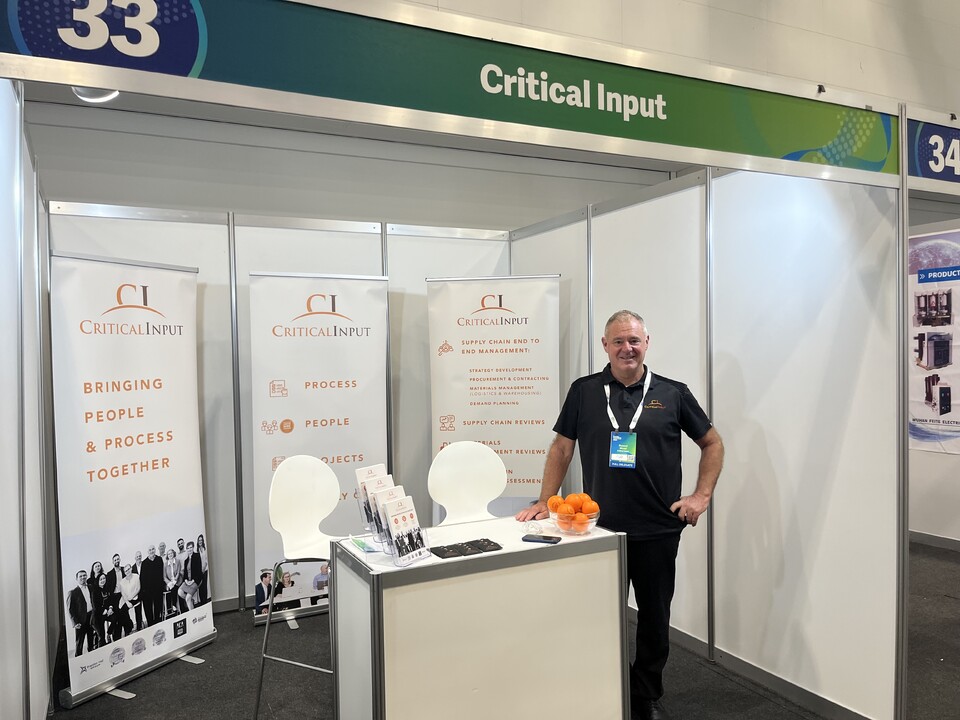
Russell at EN2024 where he engaged with industry leaders to talk all things supply chain

EN2024: Talking supply chain

Russell at EN2024 where he engaged with industry leaders to talk all things supply chain

Russell at EN2024 where he engaged with industry leaders to talk all things supply chain

During and after the EN2022 conference, I lamented quite strongly that supply chain wasn’t the main character I expected it to be.

In the post-Covid era, these concerns weren’t unreasonable and have more or less been validated in the intervening period.

But I have to acknowledge, EN2024 was different. Supply chain has rightly emerged as a key discussion area and critical enabler for what is to come, across the entire sector. Although in my view, we still have further to go – perhaps EN2026 will see supply chain as a headline topic?

From my various conversations (see acknowledgements below), there seem to be the following key resonating themes:

  • Rethinking from ‘start to finish’: We must adopt a comprehensive perspective when approaching our sourcing efforts. It’s imperative to consider the entire supply chain process, from initial demand assessment to the final deployment or utilisation of materials and services required for establishing the new energy network and facilitating the transition.
  • A shift in strategy: We must pivot our approach to market strategy to address an unprecedented demand-supply imbalance. Persisting with our current tactics, risks being outmanoeuvred by established players who are well aware of our intentions. Continuously pursuing the same skills, services, and components simultaneously puts us at a disadvantage.
  • Aggregating demand: Our focus should be on aggregating demand over a multi-year timeline or pipeline. By doing so, we can create more competitive pressure in a market that’s constrained. This long-term commitment to projects, rigorously competed for in the market, lays the groundwork for forging partnerships based on shared risks, rewards, and ultimately, a collective destiny.
  • Breaking free from traditional methods: Engaging in a perpetual cycle of transactional tendering and conventional procurement isn’t viable anymore, particularly in the face of overwhelming demand. We need to break free from these traditional approaches and adapt to the evolving market dynamicsThe recent Energy QLD/Wilson Transformers strategic partnership already serves as perhaps a compelling example.
  • More central planning: This may be a little fringe, or even controversial, but is there a role for one of the more centrally positioned, over-arching institutions to actively incentivise a more cohesive and optimal ordering and sequencing of the major projects coming through the pipeline?And further, what could be achieved if we harnessed and leveraged requirements across not just Australia, but also New Zealand and other near Pacific neighbours? Perhaps there is potential for a seasonal or cyclic labour force, given our largely harmonised border controls, to assist with peak overflow and skills shortages over this next decade?  Any effort we undertake to tame the “Everything Everywhere All at Once” current situation will doubtlessly pay us back manifold and ensure greater value for our communities into the future.
  • Modularisation and pre-fabrication: Perhaps it’s time to revisit the fundamental models we’re following for our major delivery projects. With enough critical mass and industry-wide participation, at least in the non-competitive domains, we might be able to alter where and how labour-intensive or highly complex tasks are undertaken.Small changes in some of these areas may offer major efficiency gains across the Supply Chain, especially with the current limited resources.

Final thanks and thoughts

I must convey sincere thanks to thought leaders and senior leaders from across the industry, who graciously tolerated me gently accosting them, or cornering them while rushing between sessions to engage on all things supply chain.

Many thanks to @Chris Dhu, @Peter Malinauskas, @Djuna Pollard, @Andrew Bills, @Dr Julie Beeby, @Sonya Furey, @Gloria Chan, @Bobby Vidakovic, @Rainer Korte, @Simon Emms, @Kay Pak, @Lindsay Taylor, @Carmelo Noel, @Suzanne Westgate, @Stuart Johnston, @Steve Macdonald, @Ann Whitfield, and so many more.

A final word of thanks to @John Cleland, @Dom van den Berg and again, Simon Emms for such a truly outstanding event. And of course, my stand buddy and fellow CRITICAL INPUT colleague Steph Cush.

We should all spare a thought for Guy Chalkley at this time…

#EN2026, here we come!

In the meantime, get in touch if you’d like more supply chain conversations.

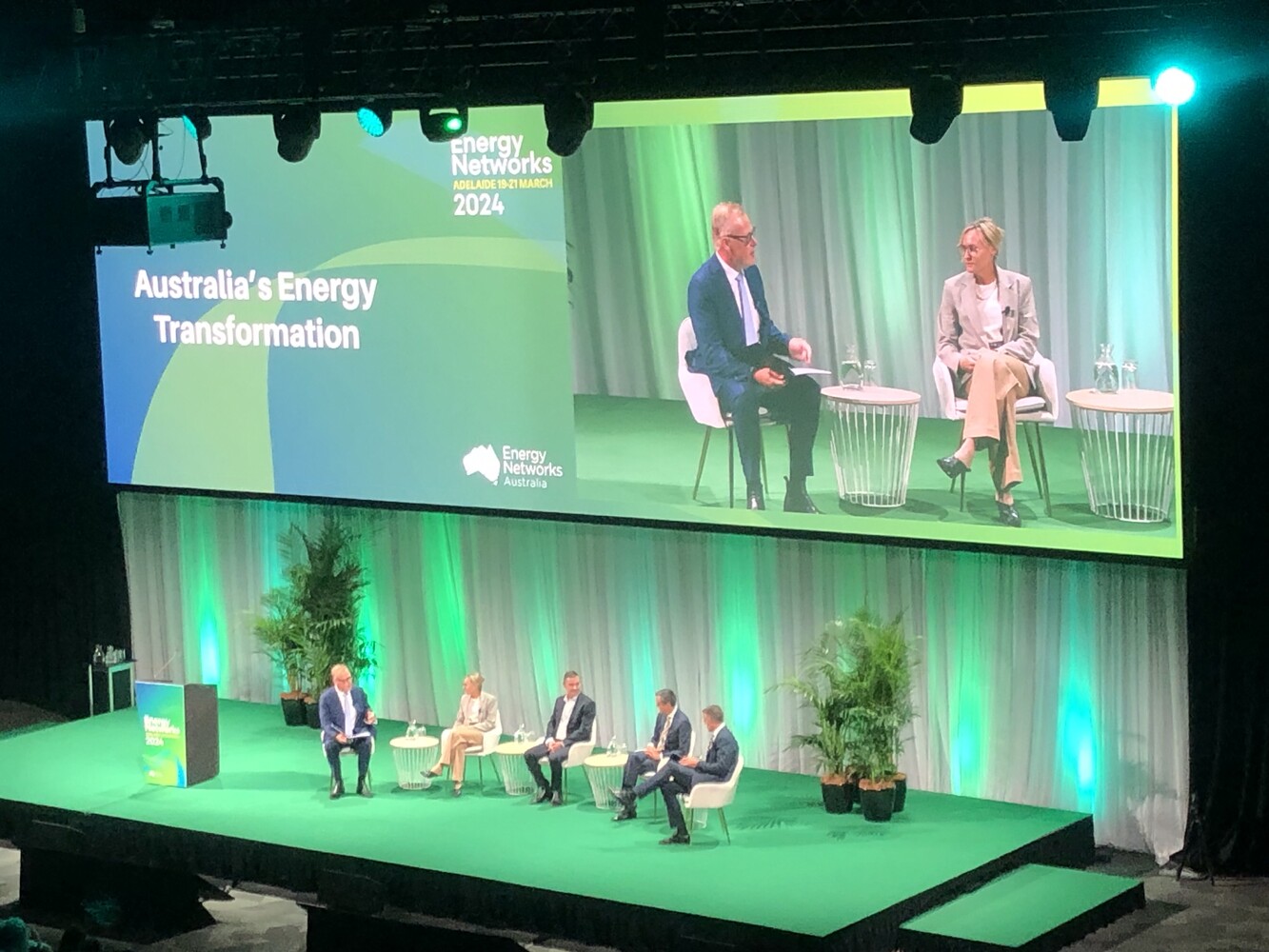
Panel discussion at EN2024

Panel discussion at EN2024