Overcoming Long Lead Equipment (LLE) Challenges with Strategic Procurement

Overcoming Long Lead Equipment (LLE) Challenges with Strategic Procurement
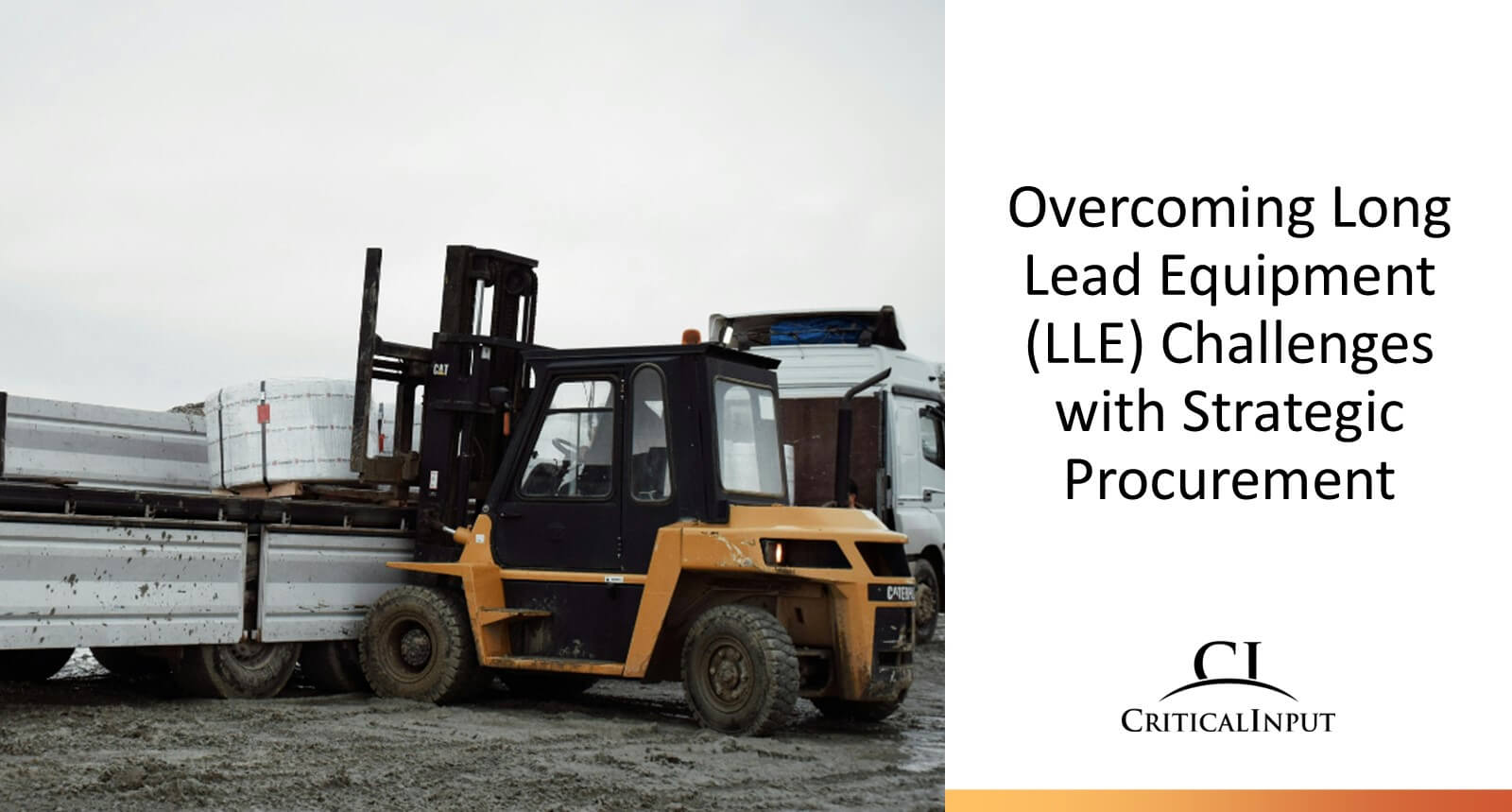
Overcoming Long Lead Equipment (LLE) Challenges with Strategic Procurement

In today’s evolving landscape, securing essential equipment in a timely manner is a critical challenge – made even more pressing by factors like Australia’s shift toward cleaner energy.

Long Lead Equipment (LLE) – including specialised machinery, structural components, and other key assets – often requires extended production, procurement, and delivery timelines. For project-based companies, timely access to LLE is vital to keeping projects on track.

Global demand, Supply Chain disruptions, and price volatility are stretching these timelines even further. That’s why Critical Input is focused on overcoming LLE challenges with strategic procurement – developing systems to bundle equipment and streamline operations.

The Challenges of Long Lead Equipment (LLE) Procurement:

Numerous factors have created bottlenecks and uncertainties that are delaying project timelines. These include:

Supply Chain Vulnerabilities

LLE often requires specialised materials or manufacturing processes which are impacted by geopolitical tensions, raw material shortages, shipping congestion, and natural disasters

Price Volatility

The cost of materials such as steel, copper, and rare earth elements can fluctuate significantly due to global demand, trade policies, and inflation

Complex Procurement Processes

Negotiating contracts, securing approvals, and finalising specifications for customised designs and quality standards can add significant time and complexity to the procurement process

Streamlining Strategic Procurement of LLE’s (1)

These delays don’t just affect timelines – they impact Australia’s energy transition by slowing the rollout of critical infrastructure like wind turbines, solar panels and storage systems and hindering the construction and commission of renewable energy facilities.

The Strategic Advantage of Bundled Procurement:

Strategically bundling procurement needs and securing manufacturing slots early in the procurement process offers multiple advantages:

Ensuring Timely Delivery

Failing to lock in production slots early can result in extended wait times or missed deadlines.

Mitigating Price Escalations

Securing a manufacturing slot often involves locking in a price for equipment, avoiding unnecessary costs.

Strengthening Vendor Relationships

Early engagement and commitment to a supplier fosters a collaborative relationship, enabling better communication, flexibility, and support throughout the production and delivery process.


Critical Input’s approach focuses on early supplier engagement and bundling across projects, allowing businesses to plan smarter and avoid disruptions.

How Critical Input is Streamlining Strategic Procurement of LLE’s

Acquiring Long Lead Equipment and locking in manufacturing slots requires expertise, precision, and adaptability. Critical Input, a distinguished Supply Chain consultancy practice, excels in guiding businesses through these complex hurdles. With deep experience operating across Australia and Southeast Asia, Critical Input provides tailored solutions that empower organisations to optimise procurement strategies and improve overall project outcomes.

Distinguished by their proven track record, Critical Input is known for:

Crafting Bespoke Improvement Strategies

Helping companies streamline procurement processes, mitigate risks, and align Supply Chain activities with broader project goals through:

  • Identification of inefficiencies and creation of customised action plans
  • Integration of advanced forecasting tools to improve demand planning for LLE
  • Development of agile systems that can adapt to changes in market conditions

Providing Robust Supply Chain Solutions

To enhance performance and resilience by fostering strong partnerships with suppliers, improving visibility in production timelines and leveraging technology for real time tracking.

  • Optimising supplier relationships to ensure reliable delivery
  • Improving collaboration between procurement teams and project managers
  • Creating contingency plans to address Supply Chain disruptions

Delivering the Right Staffing Resources

Critical Input is a trusted provider of specialised staffing resources.

  • Access to a diverse pool of skilled professionals tailored to specific project needs
  • Reduction in project delays by addressing workforce constraints promptly
  • Strengthened team collaboration and alignment through targeted staffing solutions

Their bundled system for Long Lead Equipment ensures:

Streamlined Procurement Processes – Identifying inefficiencies and implementing tailored strategies

Advanced Forecasting Tools – Improving demand planning and adaptability

Streamlined Contingency Plans – Addressing potential disruptions before they impact project timelines

Stay Competitive with a Strategic Partner

As industries continue to face global Supply Chain uncertainties, partnering with Critical Input means gaining a trusted team focused on resilience, efficiency, and long-term value.

If you’re ready to enhance your procurement systems and unlock greater business capability, reach out today.
Critical Input transforms businesses with tailored supply chain solutions and strategic process improvement.

Navigating Resource Constraints in Australia’s Energy Transition

Navigating Resource Constraints in Australia’s Energy Transition

Navigating Resource Constraints in Australia’s Energy Transition

Australia’s push toward a cleaner energy future has driven a surge in infrastructure development. However, a major bottleneck in this transition is a shortage of skilled workers in the Design and Construct (D&C) market. Without the necessary workforce to complete large-scale projects efficiently, timelines are slipping, costs are rising, and progress toward the national energy goal is slowing.

While most tackle these projects on a case-by-case basis, Critical Input recognises the need for a long-term, collaborative strategy. By shifting from a fragmented approach to a bundled program of work, Critical Input is facilitating a smoother energy transition.

The Challenges of Resource Constraints in the Design and Construct (D&C) Market

Right now, the Australian D&C market is facing major resource issues:

Workforce Shortages

The D&C market is grappling with a shortage of skilled labour, including engineers, project managers, and trades. This shortage is delaying project timelines and putting additional pressure on procurement processes.

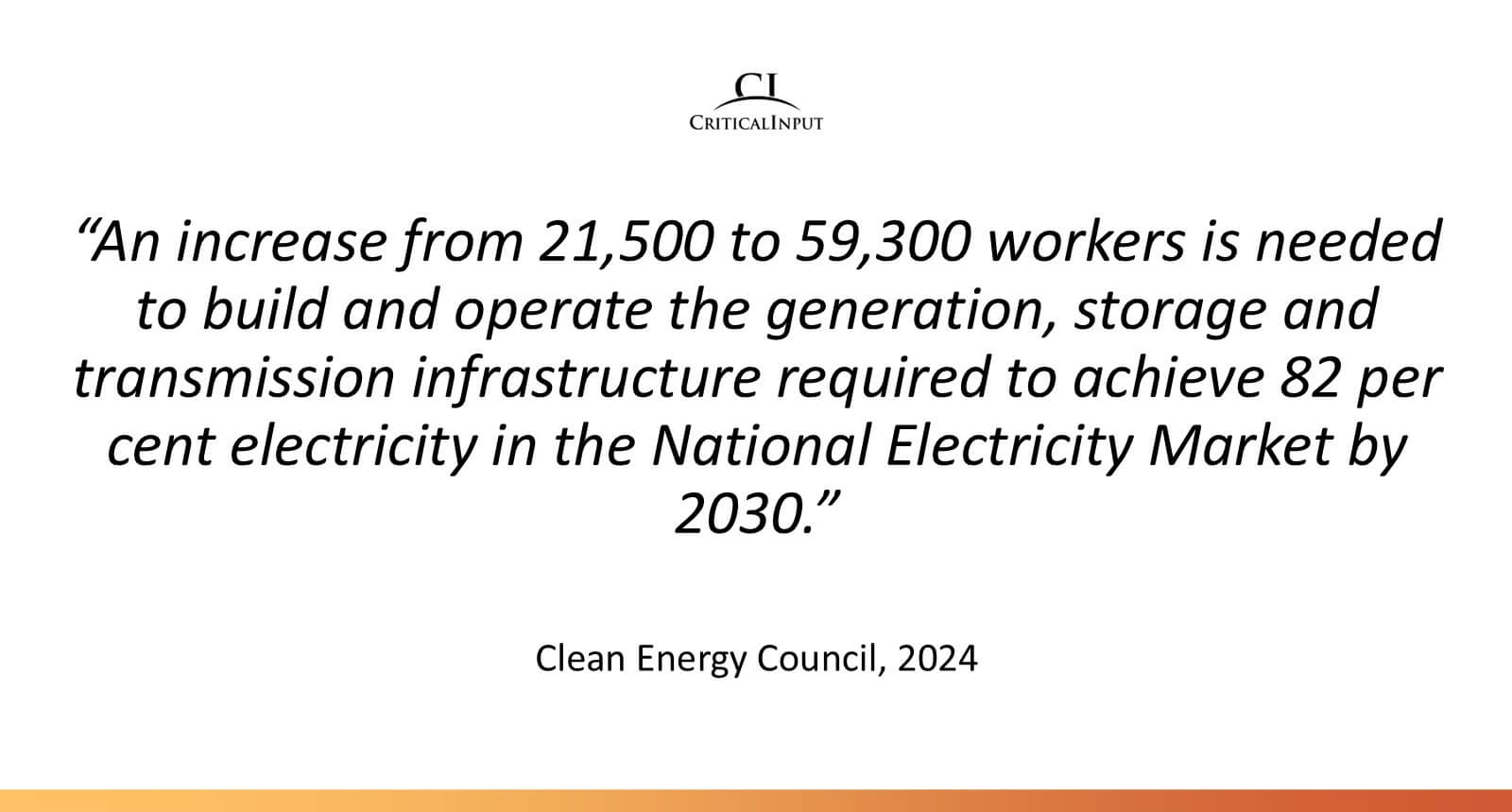
Clean Energy Council findings

Source: Clean Energy Council

Limited Contractor Capacity

Many contractors are already operating at or near full capacity, making it difficult for new projects to find experienced teams capable of managing complex requirements.

Increased Competition

With a surge in infrastructure development across Australia – driven by both public and private investments – the D&C market is experiencing heightened competition for resources, including personnel, materials, and manufacturing slots.


These challenges threaten Australia’s ability to meet climate targets and modernise its energy infrastructure.

Impacts on the Energy Transition in Australia

As project costs rise and timelines extend, Australia risks missing its emissions reduction targets. While more and more renewable projects are delayed, Australia’s power grid continues to grow, underscoring an urgent need for new infrastructure to meet the changing needs of energy consumers.

A Strategic Approach to Workforce Planning

Critical Input recognises that constraints within the Design and Construct (D&C) market requires expertise, precision and adaptability. Their distinguished Supply Chain consultancy practice excels in guiding businesses through these complex hurdles. With deep experience operating across Australia and Southeast Asia, Critical Input provides tailored solutions that empower organisations to optimise procurement strategies and improve overall project outcomes.

With a focus on strategic procurement, Critical Input understands that businesses need a long-term, collaborative strategy. As opposed to tackling projects on a case-by-case basis, they’re helping organisations shift from a fragmented, project-by-project approach to a bundled program of work, ensuring:

Longer-Term Contracts with Construction Partners

This secures a stable workforce and reduces resource competition.

Improved Project Scheduling

A programmatic approach allows for better resource allocation and efficiency.

Stronger Industry Collaboration

Encouraging partnerships across multiple stakeholders enhances project execution.


Whether it’s overcoming D&C constraints, maintaining strategic procurement, or enhancing business processes from start to finish, Critical Input offers:

Crafting Bespoke Improvement Strategies – helping companies streamline procurement processes, mitigate risks, and aligns Supply Chain activities with broader project goals through:

  • Identification of inefficiencies and creation of customised action plans
  • Integration of advanced forecasting tools to improve demand planning for LLE
  • Development of agile systems that can adapt to changes in market conditions

Providing Robust Supply Chain Solutions – to enhance performance and resilience by fostering strong partnerships with suppliers, improving visibility into production timelines and leveraging technology for real time tracking.

  • Optimising supplier relationships to ensure reliable delivery
  • Improving collaboration between procurement teams and project managers
  • Creating contingency plans to address Supply Chain disruptions

Delivering the Right Staffing Solutions – Critical Input is a trusted provider of specialised staffing resources.

  • Access to a diverse pool of skilled professionals tailored to specific project needs
  • Reduction in project delays by addressing workforce constraints promptly
  • Strengthening team collaboration and alignment through targeted staffing solutions

With extensive experience operating in both Australia and Southeast Asia, Critical Input is uniquely positioned to tackle challenges associated with resource constraints. Their holistic approach – combining strategic planning, Supply Chain optimisation, and workforce solutions – makes them an invaluable partner for organisations striving to navigate complex markets and contribute to a sustainable future.

Looking to futureproof your procurement approach?

Let’s talk about how a bundled program of work can expand your business capabilities and get you on the right track toward a cleaner energy future in Australia.

Critical Input: Bringing People and Process Together


References:

Clean Energy Council, “New report identifies workforce opportunities of the clean energy transition”, September 26, 2024.

Meet Critical Input Senior Consultant Steph Cush

Steph Cush has been a key contributor to Critical Input since 2017 and is known for her adaptability, teamwork and methodical approach to problem-solving. From supporting major clients like Transgrid and TasWater to attending major industry events, her role is multifaceted and dynamic. Originally from country New South Wales, Steph pursued a communications degree in Canberra before adventuring to London and then back to Australia. Her unplanned yet successful entry into project work has allowed her to thrive in roles that require both collaboration and a keen eye for detail. We recently caught up with Steph to learn more about her current projects, challenges, and what she enjoys most about her work.

What are you currently working on?

I’m engaged in various projects, supporting Transgrid and TasWater in multiple capacities. Additionally, I’m working to enhance Critical Input’s presence in the industry by organising and attending various industry events.

What is your greatest challenge right now?

Finding balance in busy times is a significant challenge.

What work are you loving the most right now?

I love working on process reform and improvement. Seeing a team come together to solve a problem that is causing confusion or frustration is rewarding. Even small changes can greatly improve productivity and morale.

What are you looking forward to?

I enjoy hearing about my colleagues’ projects. We’re all working on different things, so connecting and sharing experiences is invaluable. This knowledge-sharing supports us in our respective roles.

What led you into this type of work?

My path into this type of work was quite unintentional. I signed up with a recruitment agency when I moved back to Australia and got a three-month contract on a project that ended up lasting 1.5 years. A contact from that job led me to Critical Input, where I’ve been ever since.

What unique capabilities do you bring to Critical Input?

I have a willingness to get in and do the work that needs to be one while remaining flexible and adaptable.

Do you have a particular career highlight?

The friends I’ve made along the way. Great colleagues make work interesting and enjoyable.

Describe a typical day at Critical Input.

I always like to start the day with a quick catch-up with my colleagues – even just to say hello. I’m currently juggling multiple projects + laptops so that means I need to have a very solid to-do list to avoid missing anything.

What type of work do you enjoy the most?

Any work where I am learning something new is great or collaborating with others.

What are some common mistakes you see clients make with people and processes?

Not knowing what other departments do – we’re all guilty of not seeing things from the other departments perspective. Once you have the full picture you can appreciate why certain things might take time and then start to support each other a bit more.

How do you know when you’ve done a good job?

When someone is appreciative of the time you have spent trying to assist them.

If there was one thing you could change about the world, what would it be?

More communities to support vulnerable people.

What’s a fun fact about you?

I’ve never broken a bone, despite my many efforts through various sports and adventurous activities.


Meet Critical Input’s Senior Consultant and Tasmanian Business Manager Bridget Mahony

Bridget Mahony leads and oversees commercial improvement projects for CRITICAL INPUT across Tasmania and occasionally in other states. Her expertise lies in framing, scoping, and defining projects with a strategic focus on commercial and supply chain optimisation, ensuring successful outcomes. She manages process transformations through targeted projects and coordinates internal teams to achieve these goals. In essence, Bridget empowers businesses to deliver successful projects by ensuring that the right people are involved and set up for success.

What unique capabilities have you brought to Critical Input?

I integrate a broader perspective into projects, identifying key patterns and underlying issues that inform strategic improvements. My interest in human behaviour and its influence on organisational dynamics guides this process, helping align efforts with business goals and client expectations.

I focus on resolving operational inefficiencies with practical solutions that offer genuine value. My communication approach is geared towards fully understanding client needs, which ensures strategies effectively address specific challenges.

A problem-solving focus is critical in delivering substantial, enduring benefits to clients, enhancing our capacity to meet their long-term success.

If you could change one aspect of the business world, what would it be and why?

One key change I’d advocate for is greater awareness and openness to effectively implementing and embedding strategies. An industry connection recently shared a formula with me: (D+I) > R = C, meaning that Dissatisfaction plus Interest is greater than Resistance to Change. This equation highlights the critical leap from planning to action. It’s essential not only to devise strategies but to truly bring them to life. I believe encouraging more businesses to embrace this mindset—recognising the value of support in activating and sustaining change—can lead to profound improvements in how strategies are realised and goals are achieved.

Change resistance equation

Change resistance equation

What does a typical day look like for you at Critical Input?

A typical day at Critical Input involves engaging with various organisations to address issues, identify solutions, develop strategies, guide project execution and look out for areas for improvement. I usually start by reviewing emails and updates, followed by meetings with team members or clients to discuss ongoing projects and align efforts with broader goals. A dynamic schedule keeps a focus on prioritising tasks and ensuring successful outcomes for our clients.

What common challenges do clients face and how do you advise overcoming them?

Three that immediately come to mind are:

? Fear of decision-making: Clients often hesitate due to fear of mistakes. Calculated risk-taking, supported by thorough analysis and scenario planning, is important. Presenting data-driven insights helps clients gain confidence in their decisions.

? Underestimating stakeholder engagement and cross-departmental communication: Effective communication is critical for project success. Establishing a clear communication plan that includes regular updates and feedback loops with all stakeholders ensures that everyone is aligned and free to contribute to the project effectively, thereby enhancing collaboration and minimising resistance.

? Not empowering teams: Insufficient team empowerment leads to disengagement. I advocate for real delegation of authority and providing necessary resources. Fostering a trusting environment where team members feel valued enhances motivation and outcomes.

How do you measure success in your projects?

Success is when the project strategy is collectively understood and then fully realised to visibly enhance our clients’ operational effectiveness.

Embracing sustainability: How green is your supply chain?

By Tim Griffiths, Managing Director of Critical Input

There is no Planet B. The responsibility to care for our earth falls on both individuals and businesses alike.

Increasingly, customers are demanding transparency in how sustainability values are upheld throughout supply chains.

While fossil fuels remain a cornerstone, many mining companies are blending these with alternative energy sources such as hydro, solar, wind, and geothermal. For instance, Rio Tinto’s hydro-powered aluminium operations in Canada give their product a greener rating, making it attractive to eco-conscious companies like Apple.

Though alternative energy industries are more mature overseas, Australia is rapidly catching up.

Building a sustainable future requires businesses to analyse and invest in their sustainability capabilities.

At Critical Input, we provide the people, processes, and expertise necessary to progress your organisation’s sustainability journey. From the study phase to project completion, our team supports every step of the way.

Support for new projects

Innovation is key. Just because something hasn’t been done doesn’t mean it can’t be done.

Our expert team at Critical Input embraces new challenges, leveraging our principles of people and process to bridge gaps and reach green energy goals.

We offer capability assessments, feasibility support, project execution planning, and comprehensive management services.

Critical Input excels in:

? Project investigation phases, including geophysical investigations and feasibility assessments.

? Managing requirements and interfaces between design teams from concept to final design.

? Supply chain management, encompassing market nurturing, procurement, logistics, and execution management.

? Construction management with detailed planning and oversight.

? Stakeholder engagement and management, including landowners, authorities, and community groups.

Whether managing a project from start to finish, supporting green energy infrastructure, or providing expertise during peak periods, Critical Input has the resources to assist.

About Critical Input

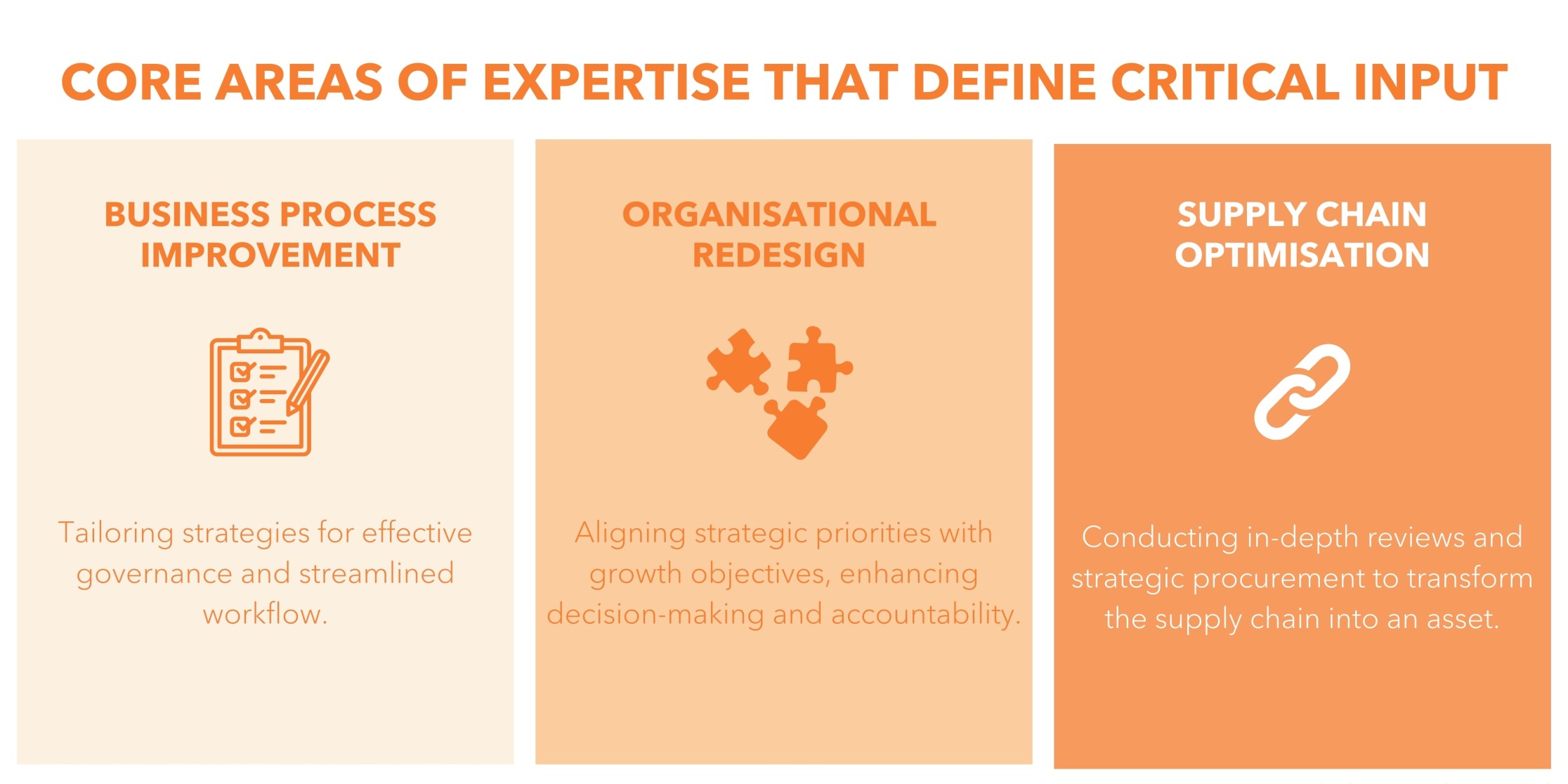
Founded in 2005, Critical Input is a 100 per cent Australian-owned company offering process improvement and supply chain and project management activities. We work in sectors from water and energy, to mining and heavy industry. At the centre of everything are three principals: process, because without process, there is no destination; people, because without buy-in, there is no evolution; and principles – because integrity is everything.

How we’re different

Unlike traditional ‘labour hire’ firms, we don’t simply place workers. Critical Input is an agile, modern workplace. We only put forward experts in the field. Our extensive database of resources provides us with access to a diverse range of skillsets across a large geographical area.

We already work with great people we know and trust and are committed to their wellbeing and professional development. Even when working client-side, our team members can access our support, systems and senior advice. This ensures you’re getting high-quality self-starters who can roll up their sleeves and get the job done.