
Pivot before panic

Have you done a supply chain health check?

According to supply chain expert Tim Griffiths, every organisation will have a base understanding of where their supply chain risks lie, but when you throw in a significant unknown like COVID-19, it’s prudent to consider “what ifs”.

Tim, who is the Managing Director of business consultancy Critical Input, said it’s not about being negative, but more about pre-empting various scenarios while there is time to pivot, rather than panic.

The ‘what if’ exercise

He provides a hypothetical scenario to illustrate.

“What if you’re an Australian brewery and your packaging is sourced from China and that particular glass bottle is not available due to impacts of COVID-19,” Tim queried.

“How much stock do you have in your inventory? When will you run out? Do you need to use this lead time to investigate an alternative supplier? Would this mean you need to re-design and re-print labelling to fit a slightly differently shaped bottle? Would you need new cartons in which to transport them? Would the new bottle be compatible with your production line?  
“And what if, you source a particular yeast from an Australian supplier and that supplier’s workforce gets struck down by the virus – what options are available? What if there are no alternatives, what are the ramifications on halting production for a period of time? Who do you need to keep updated? Do you need to contact retailers to ensure you’re not contractually penalised for failure to supply?”

Under pressure

The pressure on businesses to provide fast and reliable services is high, as is the need to predict, assess and mitigate the risk of supply chain disruptions.

“Normal operating business-as-usual activities for any organisation include an awareness of supply chain elements, which of those are critical inputs and a basic risk assessment of those components, but we need to factor in the unexpected,” Tim said.

“Critical inputs vary for each organisation, but they could be electricity, raw materials, packaging, water, logistics or people.”

When the going gets tough

Given the impact of COVID-19 on supply chains, the workforce, the operations of government, and the economy as a whole, the casualties will inevitably include businesses as well as individuals.

The knock-on effect of COVID-19 is already impacting organisations both big and small across all industries and wreaking havoc on supplies of everything from toilet paper and face masks to specialised components and electrical goods.

While the full impact has yet to be felt, there are reported cases of businesses citing COVID-19 as the cause of, or a significant contributing factor to, financial and supply issues.

“While imagining worst case scenarios might not seem like a particularly fun exercise, rationally planning ahead and making hard decisions will increase your resilience to events outside your control,” Tim said.

“Ideally, you’ll never have to visit plan b, c or d, but it’s still important that you consider these supply chain issues in advance.”

Critical Input offers supply chain mapping and risk assessments for organisations needing guidance.

Safety first always

The preservation of life is always the highest priority, so while it’s important to plan ahead, the most important factor is the safety and wellbeing of people.

“During times of uncertainty, it’s normal to go through various stress responses, but it’s important to look out for one another, show care, consideration and a community spirit,” Tim said.

“There may be cases where the risk of doing business is too high and it’s a matter of taking the financial hit.

“Our collective humanity is part of the fabric of Australian culture and contributes to long-term resilience.”
Managing change while maintaining stability

Back in the day, senior executives focussed on stability. Stability afforded steady growth for shareholders. People stayed employed. Prices were predictable. Life was comfortable. 

Across most industries and both big and small organisations, elevated competition has focussed management’s collective minds toward something that it once steered away from: change.

Expect the unexpected

Fast-forward to 2020, and life is anything but predictable. We’re only in March and already government plans for a surplus have been replaced with emergency funding injections to address fires, floods and the coronavirus. The knock-on effect of these events is already impacting businesses of all sizes and wreaking havoc on supplies of everything from toilet paper and face masks to specialised components and electrical goods.

Modern communications and social media mean these crises need to be met with transparent and instantaneous communication and decisive action. Easier said than done. There is nothing like a crisis to highlight weaknesses within organisational processes.

Change is the new normal

Catastrophic events aside, we are living in an era where the rate of change is so rapid that one year today is the equivalent of 200 pre-internet years.

Workplace stability has been replaced with structural pivots, an increasingly agile and mobile workforce and complicated global supply chains. It’s even more reason for organisations to have their houses in order. People and process need to be working in unison.

When engaging with an organisation, I particularly enjoy the change element. I like taking an organisation from one point to the next and witnessing the improvements. It’s my most satisfying piece of work. 

In order to improve, change needs to be structured in a way that the business can actually benefit from the change. We’ve seen examples when organisations have major structural changes, one after the next within short succession. This can be disruptive and even mimic the atmosphere of a crisis. 

In control and capable

One saying we use at Critical Input is, ‘in control and capable’, prior to managing the Step Change in the process.

Is your process in control? Are you capable of operating in that process? We can’t manage a Step Change in that process until you’re in control and capable within the current process. Once we’ve assisted you to become in control and capable, we can then work on a Step Change process to improve.

Starts at the top

Strategic change needs to be coupled with strong leadership, which is why we’re usually directly engaged by the management of an organisation. CEOs, business unit managers, general managers and managing directors are the instigators of workplace culture.

They set the tone. They’re also the ones who tend to take the lead on addressing internal issues around process and people.

The change pain threshold

As much as change is the new business-as-usual, individuals have different tolerances for change and the human element needs to be met with compassion and support.

Studies show the brain processes change in a similar way in which it processes death, which is why change grief is real.

Resilience is a key capability for staying effective within a workplace characterised by change and uncertainty.

Resilience relates to an ability to remain strong and flexible amidst ambiguity and change. In order for an organisation to cultivate resilience, it still needs to strive for stability, but from a change-positive rather than change-resistant mindset.

Avoid under-resourcing during transformation

Internal staff don’t always have capacity to take on projects – particularly those focussed on change – alongside their day jobs, nor often do they have an objective lens of the business.

Consultants can play a key role during such times by offering independent perspectives, fresh eyes and extra resources.

Critical Input only employs those who are experts in their field.

Our team members are able to quickly gain deep insights into organisations, draft stakeholder and process maps and roll up their sleeves to deliver what is needed during times of change, crisis or business-as-usual.

Being in control and capable comes first

According business improvement expert from Critical Input Tim Griffiths before managing a process step-change, an organisation’s goal first goal should always be focussed on being “in control and capable”.

To define this, a process is considered “in control” or stable, if it’s in statistical process control. Capability is the ability of the process to produce output that meets specifications, consistently.

“This is always our first point of focus when reviewing scope and process improvement or transformation projects with clients,” Tim said.

Having your process in control before implementing improvements will ensure your organisation is capable of managing change and more accepting of the transformation.

Given that change is the new normal in the corporate world, in theory, all organisations should be always striving to be “in control and capable” to maximise growth and adaptability.

It also means that full attention is put on finding and implementing solutions, rather than being distracted by what Tim calls “shiny rocks”.

“It’s a common phenomenon that occurs among high achievers and organisations who are looking for the ultimate solution, rather than looking at their internal basic enablers or processes, which may not appear as ‘shiny’,” Tim said.

“So they pursue the ‘shiny rock’ and disregard basic processes or abandon them for ‘not working’, yet they want to chase a new system or a new innovation before they’ve understood the process.”

More often than not the shiny rock is merely a distraction and a way to procrastinate or avoid addressing the real issue, which nine times out of 10 relates to process and is core to productivity.

“We aim to bring a lean and simple approach to the problems and issues that clients may have,” Tim said.

“We don’t bring a bucketful of solutions – it’s more of a structured understanding of the issue. This includes the drivers at the time, the issue the client may have and how we improve the processes around those issues, whether it’s in the supply chain or project management.”

ABOUT US

Critical Input is a business and process improvement consultancy. We help our clients to improve their end-to-end supply chain processes through process improvement strategies, project management and staffing resources. At the centre of everything are three principles: Process, because without process, there is no destination; people, because without buy-in, there is no evolution; and principles – because integrity is everything.

CAPABILITIES

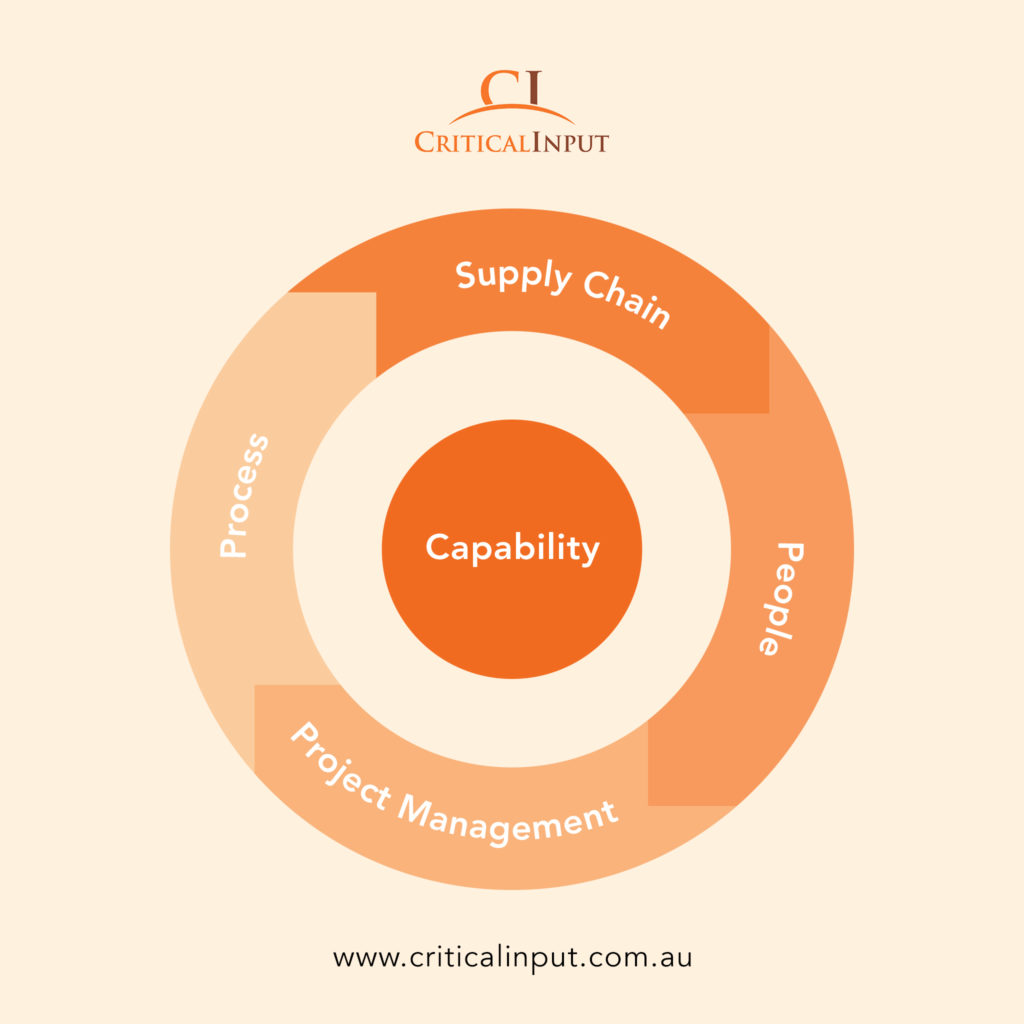
Experts in: Supply Chain: CI works across the end-to-end supply chain, delivering sustainable results with our proven change-management approach; Project management: We work collaboratively with our clients to ensure the new and enhanced capabilities are fit-for-purpose and tailored to the context, maturity and requirements of their organisation; People: CI can provide skilled resources as backfill, for outsourcing purposes or as additional support; Process: CI works with our clients to help understand, communicate and improve their processes.

DIFFERENTIATORS

Our brand values of Process, People and Principles set us apart.

PAST PERFORMANCE

Rio Tinto Projects, Sedgman/THIESS, Sydney Water Corporation, Coronado Coal Pty Ltd, Cement Australia Pty Ltd, Senex Energy, APA Group, Archipelago Resources, Glencore/Xstrata, AECOM.

These top three qualities of a great leader may surprise you…

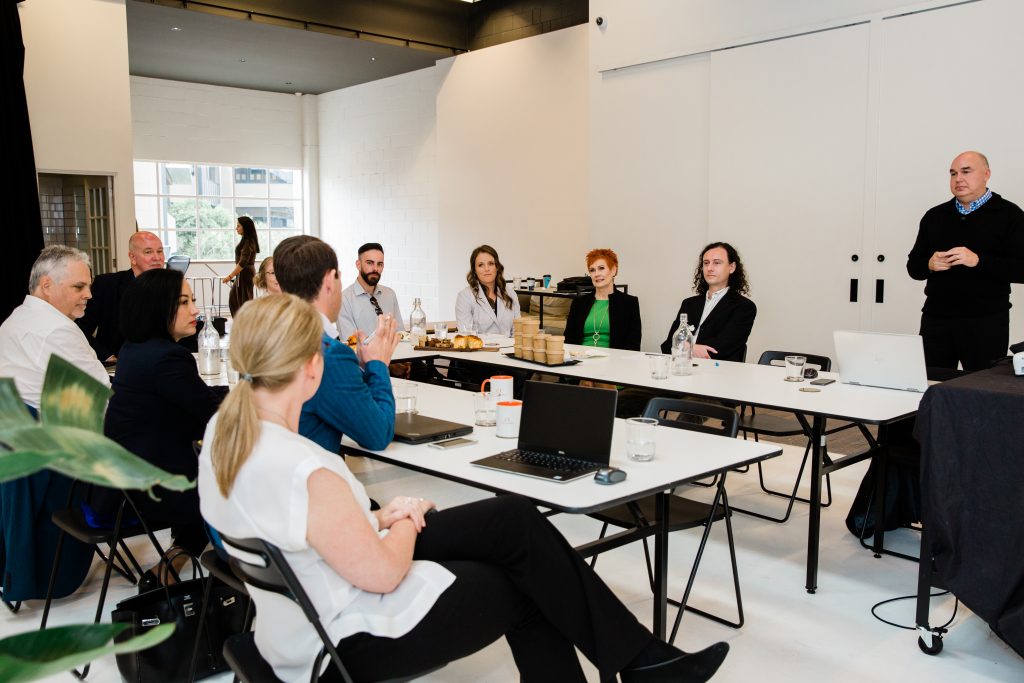
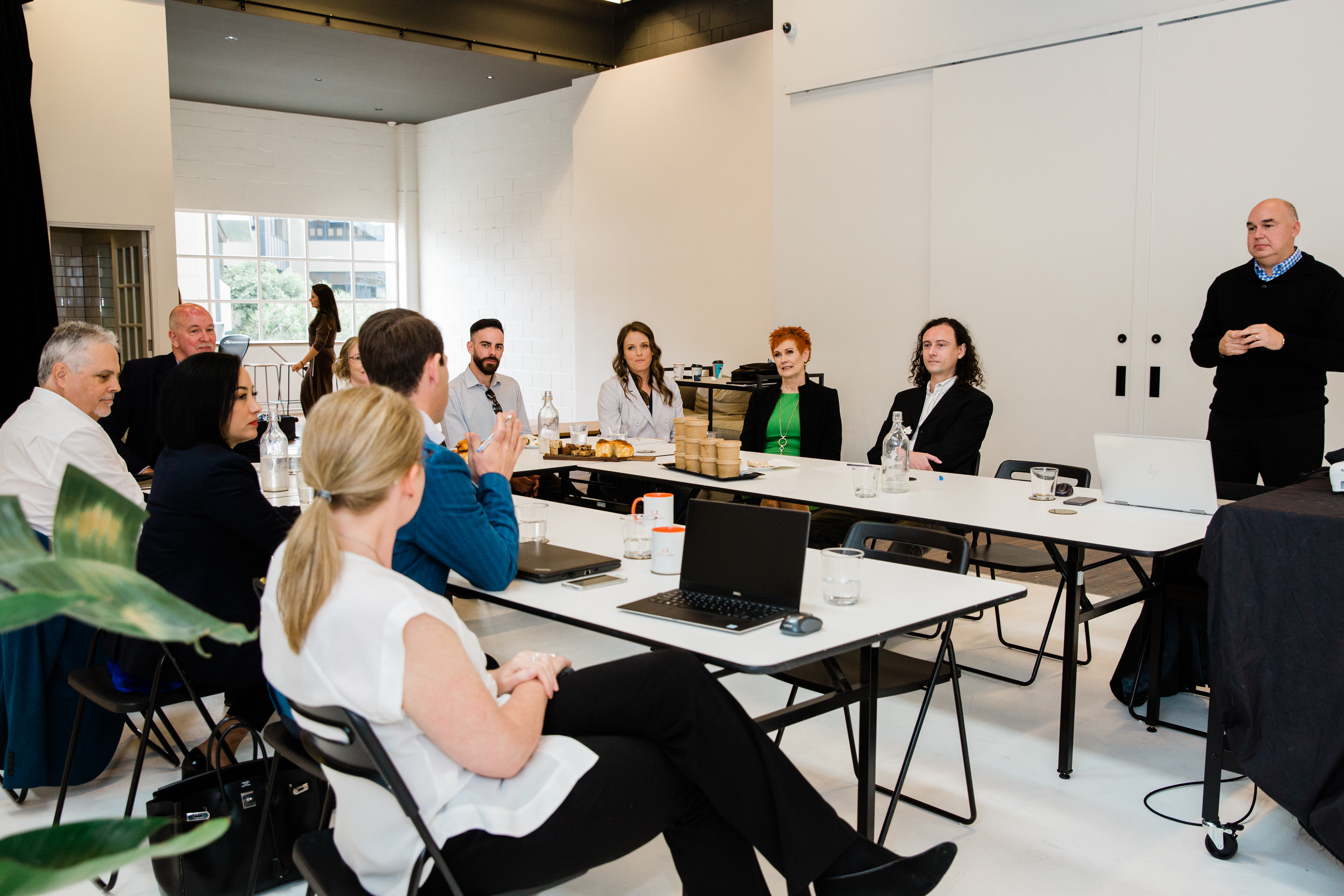
Managing Director Tim Griffiths leading a Critical Input team meeting

The top three qualities of a great leader

Most people want to go to work and feel as though they make a difference. A great leader will set their people up for success and reap the benefits in improved productivity, better results and, ultimately, happy shareholders and staff.

The three top qualities of a great leader spring from within and can be found in all of us.

1. Caring is powerful

A great leader demonstrates a great deal of care for the people within their organisation. They really understand that those people really are what defines that business.

Companies’ visions or strategic imperatives usually focus on shareholders and creating value. Rarely is there any mention of caring for the people who work there.

If leaders care for their people and look after them, then customers will naturally be looked after, the bottom line will improve, and shareholders will be happy.

Leaders who can create a caring culture where people operate out of creativity, not fear, will reap great results and positive change.

2. Being genuine is impressive

People can usually tell when a leader is not being genuine with them and that will impact on their performance and commitment. 

This means not only being genuine in terms of being themselves (no-one likes a fake) but also being truthful in your dealing with others – especially your team.

A leader who is genuine in both senses of the word will gain the trust of their people who know that they are being given the whole picture in terms of their jobs and the business’ direction.

That trust will manifest in better performance, less staff turnover and reduced absenteeism.

3. Transparency breeds legitimacy

In organisations where leaders hold back on information, staff struggle to understand where they’re supposed to go without transparent communication and a shared clear message being understood throughout the business.

Culture beats strategy every time. A good leader can create their own micro-culture, which starts with their commitment to transparency and communications. This helps to build an atmosphere of trust within the team.

People who feel safe will communicate back to their manager, enabling them to make informed decisions based on that feedback. No-one is going to want to step forward, step up, put their head up, if they feel that it’s going to get chopped off.

ABOUT US

Critical Input is a business and process improvement consultancy. We help our clients to improve their end-to-end supply chain processes through process improvement strategies, project management and staffing resources. At the centre of everything are three principles: Process, because without process, there is no destination; people, because without buy-in, there is no evolution; and principles – because integrity is everything.

CAPABILITIES

Experts in: Supply Chain: CI works across the end-to-end supply chain, delivering sustainable results with our proven change-management approach; Project management: We work collaboratively with our clients to ensure the new and enhanced capabilities are fit-for-purpose and tailored to the context, maturity and requirements of their organisation; People: CI can provide skilled resources as backfill, for outsourcing purposes or as additional support; Process: CI works with our clients to help understand, communicate and improve their processes.

DIFFERENTIATORS

Our brand values of Process, People and Principles set us apart.

PAST PERFORMANCE

Rio Tinto Projects, Sedgman/THIESS, Sydney Water Corporation, Coronado Coal Pty Ltd, Cement Australia Pty Ltd, Senex Energy, APA Group, Archipelago Resources, Glencore/Xstrata, AECOM.

Critical Input helps Sydney Water reach milestone

While Sydney Water is a colossal organisation compared to CRITICAL INPUT PTY LTD, Sydney Water and Critical Input represent an integral part of each other’s stories, thanks to a many-faceted relationship that has spanned nearly five years. During this time, Critical Input’s Senior Consultants have worked both on and off-site on projects at the most senior and granular levels to ensure the small steps have been taken toward continuous improvement and, ultimately, toward the major transformation that is the new Regional Delivery Consortia (RDC) framework under the banner of Partnering For Success (P4S). As with all Critical Input projects, the work has been a close collaboration with our client. The focus has been on process, people, project management and supply chain. A big thanks to Mark Simister, Mary Gardner and so many others for their commitment to doing great work.