
Pandemic opens eyes to supply chain risks

There are certain things we’ve seen that we can’t “unsee” since the Covid-19 pandemic earned 2020 a solid place in the history books.

Some might be trivial, such as the contents of a co-worker’s living room caught via Zoom.

Others might be more significant, like the fact almost every industry has supply chains dependent on goods from offshore, whether that be parts, packaging, ingredients or finished products.

What have we learned?

There are lessons we have learned. One of those is supply chain fragility and the need for Australia to maintain supply chain sovereignty on essential items.

While shovel-ready mining and construction projects are urgently required to kickstart the economy, during post-Covid Australia, I’m predicting an increased focus on innovation, manufacturing and collaboration across disciplines to (as was headlined in the Weekend Australian, May 23-24, 2020) “Make Australia make again”.

I think there’s going to be a convergence between private and public sectors in a way we may never have seen before as government incentivises private corporations to manufacture. The fact that we’ve seen a decline in manufacturing during the past 40-50 years could actually be used to our advantage as it gives us freedom to be strategic about what we focus on, without the burden of holding onto outdated industries.

Epidemiologists had warned about a possible pandemic, but now that it’s happened, how will we plan our future supply chains? How will we factor in pandemic risk with the knowledge we’ve gained?

Australia is smart and resource-rich – now what?

The pandemic has highlighted that Australia can still make stuff – breweries pivoted to hand-sanitiser while jeans manufacturers stitched personal protective equipment. And it turned out, for at least these items, they were still affordable.

We’ve proven when required, the vast majority of Australians can unite, cooperate, respect restrictions and adapt to new working arrangements. Even our kids stepped up to undertake distance education at short notice. As a result, Australia has fared better than most countries around the world. We’re a smart country, that’s rich in resources and is a food bowl for much of Asia. We also make great wine.

What else could we make in Australia? From a mining perspective, our resources are known for being the best. Is it time we started to turn our coveted raw materials into more complex products? What are these products? Electric vehicles? Pharmaceuticals? Data warehousing? Solar panels? Wind turbines?

What will the future look like?

The “Made in Australia” movement is having a moment, but the key for this to be sustainable is innovation balanced with affordability. Could we pass on cost-savings locally on energy and raw materials to provide us with a competitive advantage? Are there ways for us to work smarter?

Perhaps the future is neither nationalism nor globalism. There’s also a concept called “glocalisation”, which is a combination of “global” and “local”. According to Wikipedia, the notion of glocalisation “represents a challenge to simplistic conceptions of globalisation processes as linear expansions of territorial scales. Glocalisation indicates that the growing importance of continental and global levels is occurring together with the increasing salience of local and regional levels”.

Technology enables greater collaboration on a global scale, but we may still choose to manage parts of the process locally to provide advantages in quality, control and security. An example we’re already seeing is the unification among the various researchers and doctors working toward treatments and vaccinations for Covid-19, while still engaging in local trials and studies.

The virus has shown us how connected we are, but it’s also uncovered supply chain risks we may never have realised existed within our own supply chains. What are we going to do with these insights?

Please pay now – the politics of payment terms

By Tim Griffiths, Managing Director, Critical Input.

In business, invoice payment terms are a critical component of our supply chains and the commercial model under which we operate.

Payment terms within the Australasian market differ, but the overwhelming average is 30 days from invoice.

It’s a reasonable term and one most companies, including small businesses, can work with.

Obviously, better terms are always welcome and can even generate a rate or unit discounts or speedier delivery.

Trend toward speedy payment

 In the current economic climate, we’re witnessing many large private and public sector entities drastically reduce their payment terms to seven days or immediate upon invoice.

This gesture is extremely helpful and beneficial to small businesses and shows respect for the business community and how SMEs may be struggling with cash flow during these uncertain Covid-19 times.

 But (and there’s always a but), we’re seeing some organisations taking advantage of the situation and requesting longer payment terms – 30 days from month end, 45 days, 45 days month end, etc.

To significantly change payment terms during uncertain economic times is somewhat arrogant and shows a lack of understanding of how small businesses operate and the way cash flows impact them.

The problem of late payments to small businesses became part of a discussion in Australian politics a few years back when policymakers in Canberra called on lawmakers to mandate 30-day maximum payment times for business-to-business sales.

A question of ethics

Social commentator Bernard Salt sees late payment as an ethical issue. In 2018, he called for “same day pay” in a column in The Australian newspaper, arguing that companies should not be buying products and services if they can’t immediately pay for them.

“There are 1.5 million small businesses in Australia,” he said. “If you add in their partners, and staff and kids, then you are probably looking at four to five million people in Australia that are affected by timelines or otherwise of small business payments.

“The best thing you can do for small business is to pay promptly, on the day, same day pay. If you can’t pay for it, don’t buy the good or service.

“Refusing to pay in a timely and reasonable and fair manner is the equivalent of theft. I just cannot understand where people believe it is good or smart business practise. People might think it is smart, I think it is smarmy. If you incur a debt, you pay it and pay it promptly.”

Jeopardising supply chain

He makes a valid point. Slow or late payment puts strain not only on small cashflows, but also on relationships.

It can slow down production, reduce supply chain capability and reliability and erode goodwill. It could mean that next time there’s a supply chain shortage of a certain item, you miss out and instead the small business prioritises the customer who always promptly pays.

Delayed payment is actually quite dodgy when you think about it.

People remember how companies behave in a crisis

In an era where workplaces are becoming increasingly agile and external companies are functioning as extensions of in-house teams, it’s crucial that payment terms are fair and considerate.

It’s unlikely your employees would be okay with uncertain wages and timeframes, so why would you expect suppliers to wear that treatment?

People remember how companies behave during a crisis and these behaviours can have long-lasting impacts on future supply chains as well as reputations.

Do the right thing. Pay that invoice. Now would be a good time, but within the fair timeframe is also acceptable.

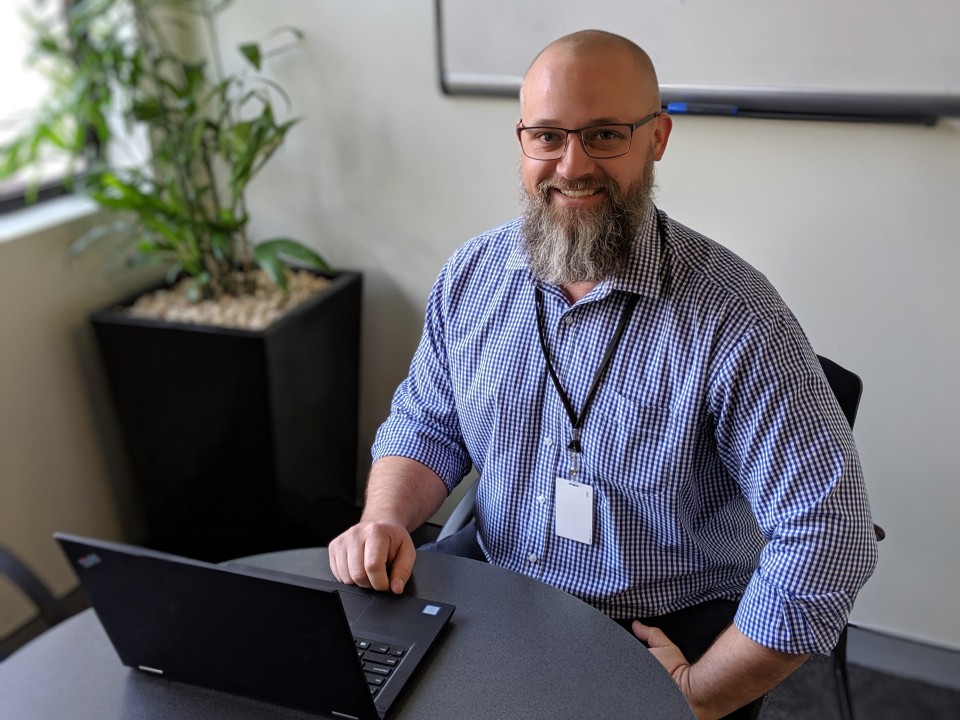
Meet Henk de Vos, Critical Input Senior Consultant + WA Business Manager

Throughout his 30-year career, Critical Input Senior Consultant and WA Business Manager Henk de Vos has worked for some of Australia’s leading companies in both domestic and global supply chain roles. Equipped with an MBA, Henk has successfully designed and delivered strategic transformational projects across multiple business sectors including: resources, engineering, construction, aviation, utilities, light and heavy manufacturing and defence and financial services. His work has seen him achieve a dynamic balance between sustainable cost-savings and process improvements across supply chain and broader business functions.

What led you into this type of work? I enjoy the challenge of improving the company’s bottom line by continually challenging processes, systems and cost controls.

 What do you bring to Critical Input that is unique and beneficial to clients? I’d say hands-on experience in designing and delivering optimising projects across a raft of industry sectors including resources, engineering, financial services, manufacturing, defence and aviation.

 Do you have a particular career highlight? I successfully established a Group Supply Chain function for two leading Australian companies that operated independent business units. Through consolidated procurement, both companies were able to realise economies of scale to reduce purchasing costs. 

 Is there a particular type of work that you enjoy the most? I gain immense satisfaction assisting companies to develop and implement business strategies for required projects and programs of works.

 What are some of the most common mistakes you see clients make when it comes to people and processes? I’ve seen clients rely on their own team to manage both the project and their day-to-day duties. This ultimately leads to the sacrifice of the success of one or both outcomes.

 How do you know when you’ve done a good job or when a project has been a success? When the customer is happy and business impact is positive.

 If there was one thing you could change about the world, what would it be? Stop relying on past laurels, and instead maintain focus on driving continuous improvement. 

From Critical Input Senior Consultant’s Tim Garland’s bunker…

With employers all around the world extending work from home arrangements, here at Critical Input, we feel fortunate that we were pre-adapted for COVID-19 remote working. In fact, for Critical Input Senior Consultant Tim Garland, who canceled his gym membership pre-Covid, on a day-to-day basis, not much has changed at all. We caught up with him at his Brisbane bunker to chat about his current projects.

“Right now I’m working with Queensland-based mining company New Hope Group. It’s been a long time coming, but we’re hoping to soon secure approval for Stage 3 of the New Acland Mine Project in western Queensland.

I’m researching potential vendors and assisting with procurement, policies, procedures and expressions of interest for tenders. We’ve already awarded the design contract for a creek crossing, which is currently in the design phase. We want to be ready to hit the ground running the moment we get final approvals. We can’t turn dirt until then. Hopefully, it’ll come through soon as it’ll support 761 direct jobs and inject $7 billion into the Queensland economy, which is much-needed given the impact of Covid-19.

New Hope treats me as part of the team, rather than a contractor so we’re in constant contact. The CEO is very hands-on and the core team has worked in the company for 10-20 years. I can always access the decision-makers and experts with extensive corporate knowledge, which makes getting the job done more efficiently.

No alt text provided for this image

Since Covid-19, face-to-face meetings have been replaced with video-conferencing and phone calls. I also have weekly catch-ups with Tim Griffiths where we discuss projects. At the moment, the mine site has restricted visitors. I will need to visit as part of the tendering process, but will be able to manage with social distancing restrictions.  

New Hope moved its offices from Brookwater, which was a five-minute commute from me, to the Brisbane CBD. As a consequence of the Covid-19 restrictions, I’ve not worked from the new digs yet! Remote working suits me. There are fewer interruptions, so I find it more productive. I also eat healthier lunches (and less take-out) and use less petrol. Life hasn’t changed substantially for me these past few months – I quit the gym before Covid-19!”

Part 2: Top tips for mentor-mentee success

In Part 2 of this two-part series, Critical Input Senior Consultant Chris Bevin delves into the mentor-mentee relationship and how to form one, and why you should.

Chris has been a mentor through the Australian Institute of Project Management (AIPM) for two years, and offers these top five tips for mentor-mentee relationships:

1.     Set goals. Have some plan on what you’re hoping to achieve through the mentoring program, and to get out of each mentoring session. It’s important to communicate a broad agenda or framework ahead of each appointment.

2.     Have clear rules and guidelines. Understand the time commitment, responsibility for setting up sessions, means of communication – are you meeting face-to-face (following social distancing guidelines)? Using Skype? Talking over the phone? Is the mentor is available for unscheduled sessions?

3.     Communication needs to be honest. Everybody communicates differently and has different expectations. These need to be agreed upon and understood at the outset to remove confusion. It’s critical that both mentee and mentor feel they can communicate openly and honestly.

4.     Mentoring relationships need to be confidential. It’s important for the mentee to feel secure knowing the mentor will maintain confidentiality (unless agreed otherwise).

5.     Be present. When you’re in a mentoring conversation, switch off phones and remove distractions. It’s tempting to multi-task especially during a Skype or phone meeting, but it’s important that both the mentor and mentee are committed to their time together. Come prepared and be truly present.

When seeking a mentor, Chris advises looking for someone with the skills, attributes or capabilities you’d like to build and emulate.

“A number of professional organisations, such as the Australian Institute of Project Management (AIPM), run structured out-of-house mentoring programs that can be invaluable in locating a mentor outside your immediate network,” Chris said.

“A good mentor is willing to provide guidance and support and alternative ways of looking at things, wherever the mentee is at within their own professional journey.”

The mentor doesn’t need to be all things to all people, but should possess capabilities that would benefit you as a mentee.

“That person needs to be willing to guide you and help you gain access to the resources, skills, and competence you’re looking for,” she said.

“Be honest and upfront about what you’re trying to achieve from the relationship, both for yourself and the person you’re approaching for mentoring.”

About Critical Input

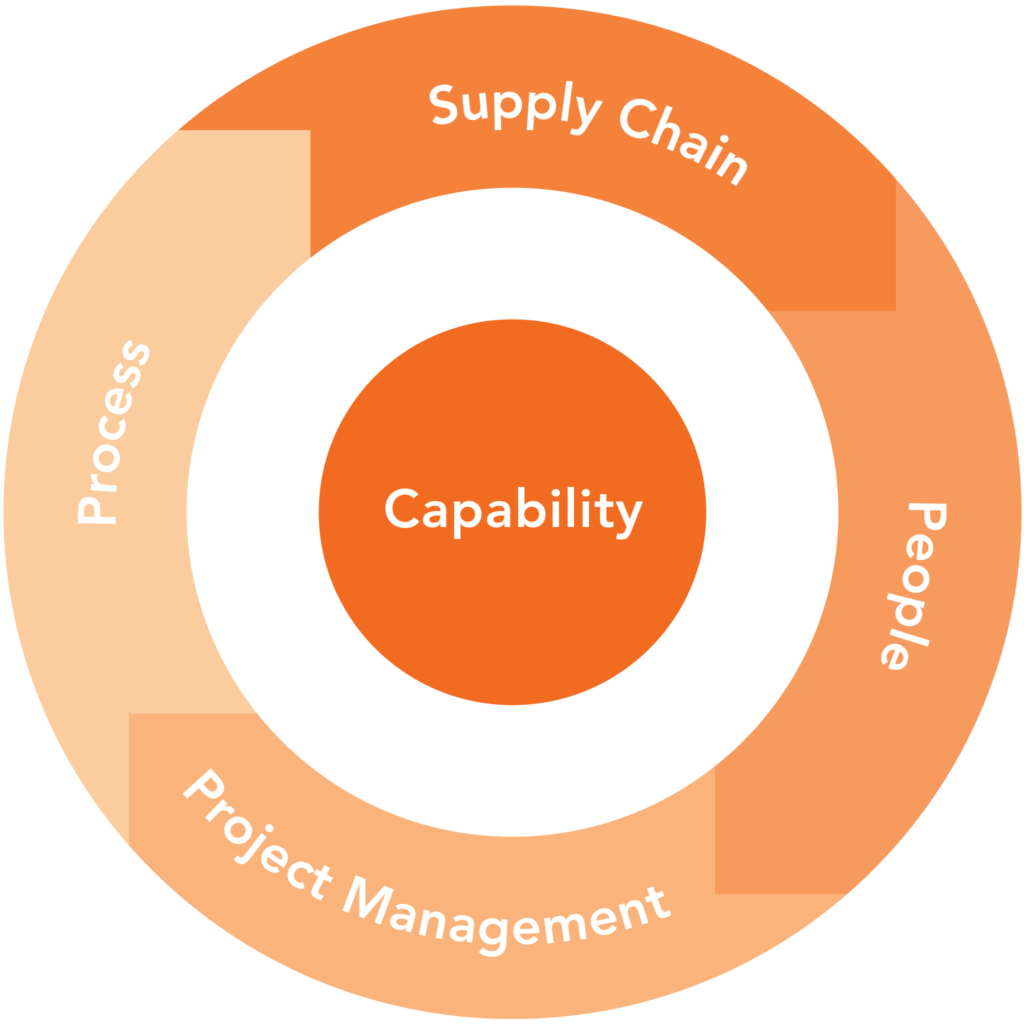
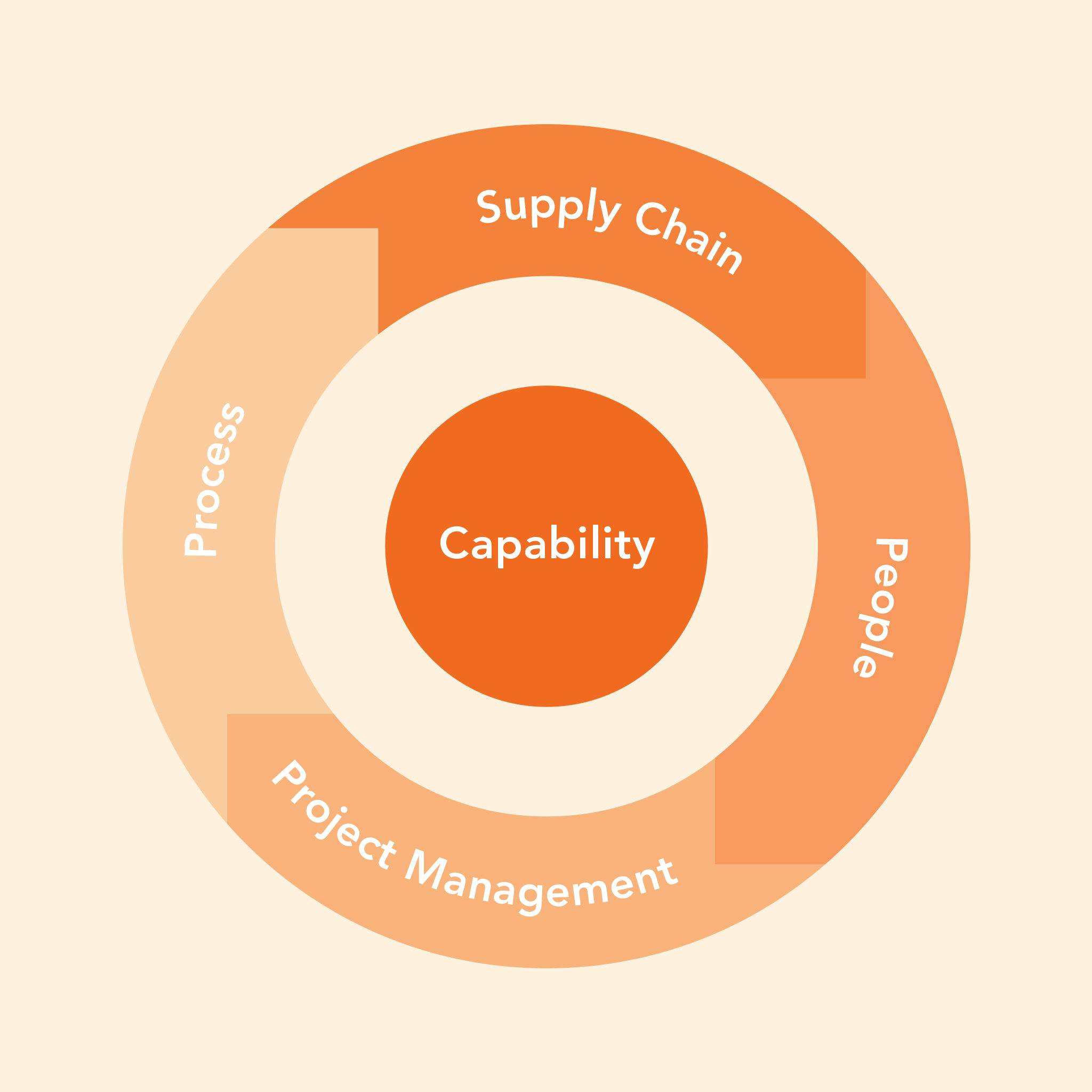
Founded in 2005, Critical Input is a consultancy service offering process improvement and supply chain and project-management activities. It works in sectors from water and energy, to mining and heavy industry. At the centre of everything are three principals: Process, because without process, there is no destination; people, because without buy-in, there is no evolution; and principles – because integrity is everything.

Critical Input’s Managing Director Tim Griffiths has handpicked a team that can provide the right resources, the right skill set and the right mindset. Each one is senior in their experience, so they can hit the ground running on clients’ projects. Critical Input takes a simple approach to allow organisational enablers – both people and processes – to improve activities. We see that as critical – hence the business name.

“The name ‘Critical Input’ was inspired by the projects I was working on before forming the company. I’d name those projects ‘critical inputs’ to the business because I was managing, say, a mining activity’s major ‘critical inputs’ – power, water, fuel, tyres. So, the activities we look at around people and process and putting those together, within the supply chain and project management technical activities, form the critical inputs.” -Tim Griffiths